
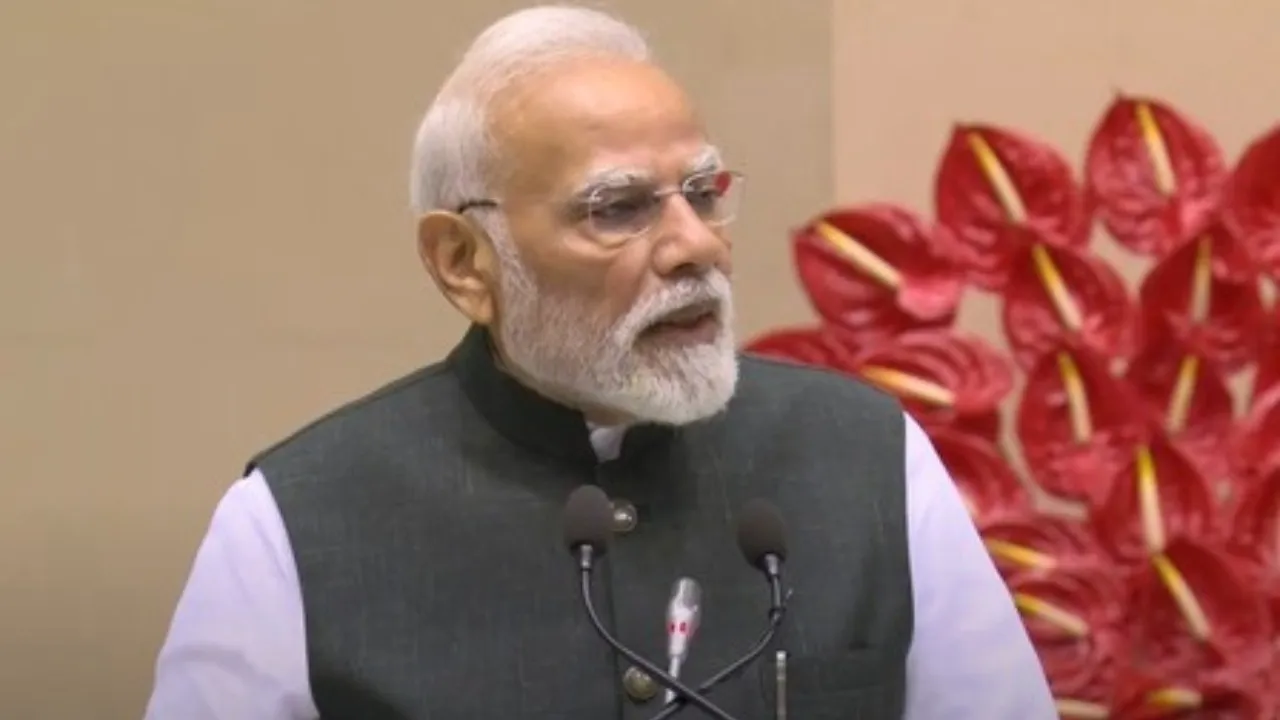
Amid rising geopolitical tensions in West Asia, Narendra Modi has called for a nationwide effort to reduce economic pressure on India, urging citizens to conserve fuel, save foreign exchange, and avoid non-essential spending.
Speaking in Hyderabad, the Prime Minister said the global situation has pushed up energy prices and increased pressure on India’s import bill. He appealed to citizens to use petrol and diesel only when necessary and adopt practical alternatives such as public transport, metro travel, carpooling, and greater use of electric vehicles. He also suggested that businesses and institutions revive work-from-home, virtual meetings, and online conferences to cut daily commuting and fuel consumption.
Focus on protecting foreign exchange reserves
Narendra Modi stressed that conserving foreign exchange has become especially important because India remains heavily dependent on imported crude oil.
In a broader appeal, he urged people to postpone non-essential foreign travel for at least one year, particularly overseas vacations and destination weddings. He also asked citizens to avoid buying gold for a year, saying imports of the precious metal contribute significantly to foreign exchange outflow.
National discipline during a global crisis
The Prime Minister framed the current moment as one that requires collective responsibility rather than panic. He said small lifestyle changes made by millions of people could help cushion the economic impact of global instability.
The remarks come as the conflict in West Asia continues to raise concerns over global crude supplies, shipping routes, and commodity prices. Market reactions in India on Monday reflected those concerns, with pressure visible on the rupee and equities.
If sustained, the Prime Minister’s appeal could shape both consumer behaviour and policy discussions in the weeks ahead, especially if energy prices remain elevated.