
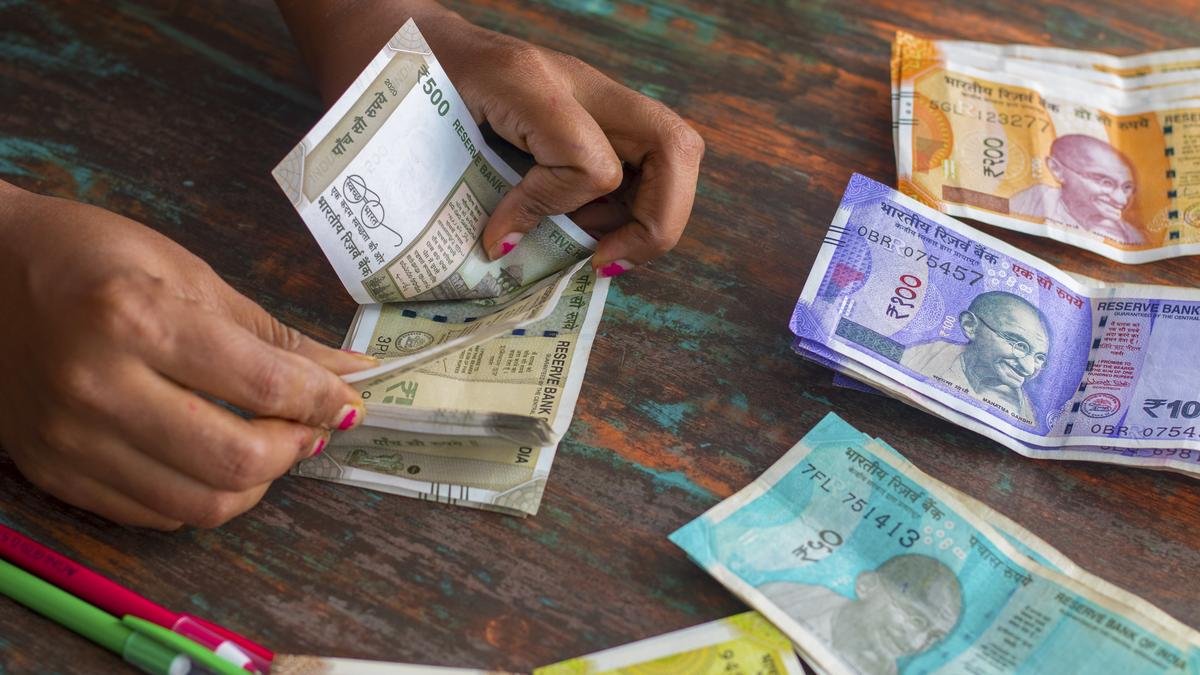
The Indian rupee weakened by 20 paise to 93.73 against the US dollar in early trade on Tuesday (March 24, 2026), pressured by a stronger greenback and continued volatility in global crude oil prices despite diplomatic signals between the United States and Iran.
At the interbank foreign exchange market, the rupee opened at 93.66 per dollar before slipping further to 93.73, compared with its previous closing level. Currency traders attributed the weakness in the local unit to rising energy prices, global uncertainty, and persistent outflows of foreign investment.
Oil Prices and Geopolitical Tensions Weigh on Rupee
The rupee has remained under pressure due to fluctuations in global crude oil prices, which are highly sensitive to developments in the ongoing tensions involving the United States and Iran.
On Monday, US President Donald Trump said Washington was holding discussions with a “respected” Iranian leader and suggested that Tehran was open to negotiations aimed at ending the conflict. Trump also extended the deadline for Iran to reopen the Strait of Hormuz by five days, warning of possible strikes on Iranian power infrastructure if the passage remains blocked.
However, Iran rejected the claims of negotiations, adding fresh uncertainty to the geopolitical situation and contributing to volatility in energy markets.
FII Outflows Add Pressure on Local Currency
Apart from global developments, the rupee was also weighed down by heavy foreign institutional investor (FII) outflows. According to exchange data, overseas investors sold Indian equities worth ₹10,414.23 crore on a net basis on Monday, reflecting risk aversion among global investors.
Forex traders noted that sustained capital outflows often put downward pressure on emerging market currencies, including the rupee.
RBI Monitoring Rupee Movement
Market participants said the Reserve Bank of India (RBI) has been closely monitoring the currency movement and may intervene to prevent excessive volatility.
Anil Kumar Bhansali, Head of Treasury and Executive Director at Finrex Treasury Advisors LLP, said the rupee had earlier slipped to 93.98 against the dollar, with some trades even taking place above the 94 mark before recovering slightly.
He added that the market reacted positively after Trump announced a five-day pause in potential strikes on Iranian power plants, though Iran denied that negotiations were underway.
According to Bhansali, the RBI was seen around the 93.95–93.98 range, indicating possible intervention to stabilise the currency as oil price movements continue to influence market sentiment.
Dollar Strength and Market Trends
The US dollar index, which measures the greenback’s performance against a basket of six major currencies, rose 0.42% to 99.36, reflecting broader global demand for the American currency.
Meanwhile, Brent crude, the global oil benchmark, was trading 3.96% lower at $103.9 per barrel in futures trade, though prices remain elevated due to geopolitical tensions and supply concerns.
Domestic Stock Markets Show Resilience
Despite pressure on the rupee, Indian equity markets opened on a strong note during Tuesday’s morning session.
- The BSE Sensex rose 829.40 points (1.14%) to 73,525.79
- The Nifty 50 climbed 234.65 points (1.04%) to 22,747.30
Traders said the positive momentum in equities helped limit sharper losses in the rupee, though currency markets remain sensitive to global oil price movements and geopolitical developments.
Outlook for the Rupee
Analysts expect the rupee to remain volatile in the near term, largely influenced by:
- Developments in the US–Iran geopolitical situation
- Movements in global crude oil prices
- Foreign capital flows into Indian markets
- Possible RBI intervention to stabilise the currency
For oil-importing economies like India, sustained high crude prices could continue to put pressure on the rupee and the broader economy.