
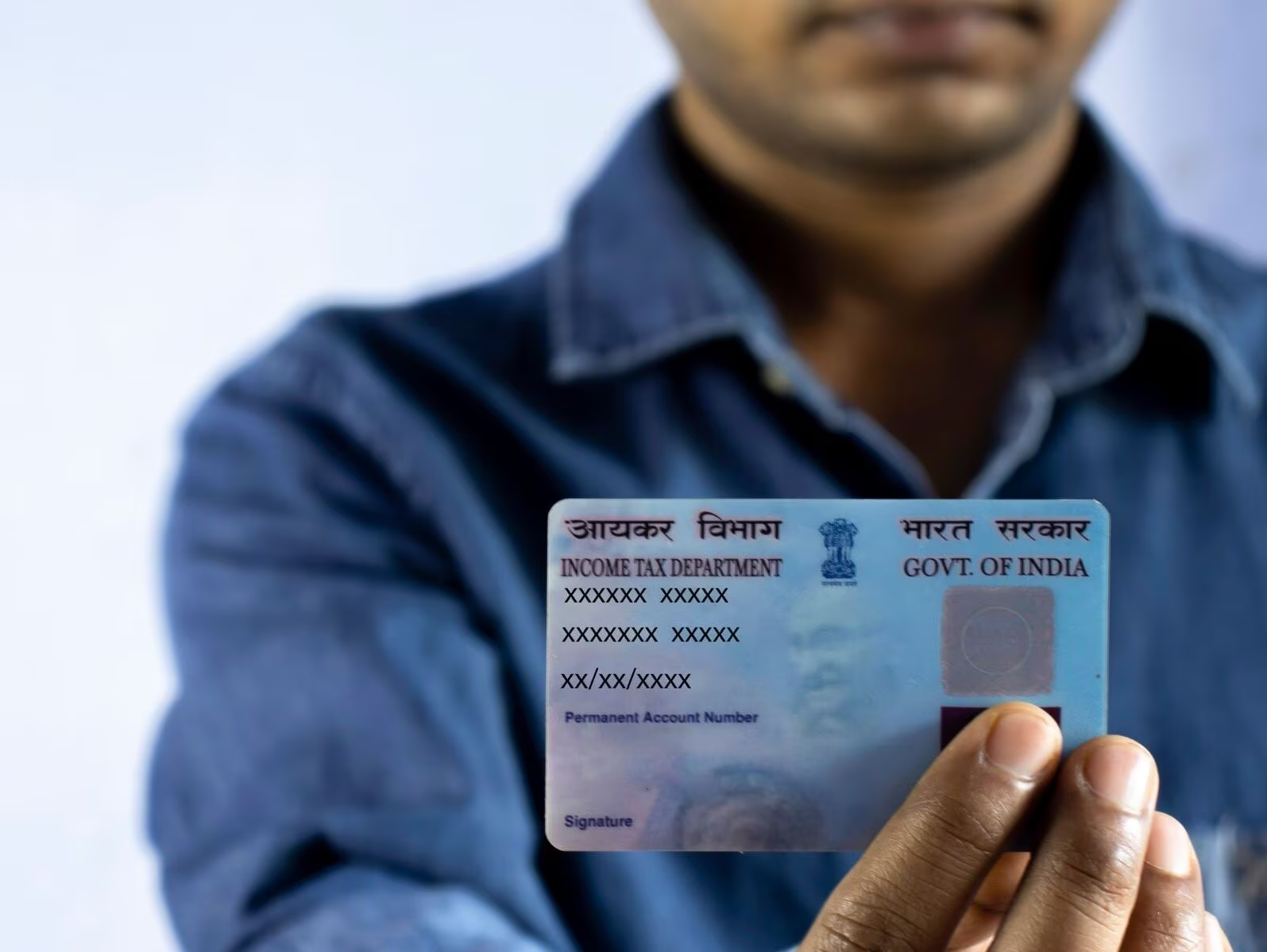
The Government of India is set to implement revised PAN application and usage norms from April 1, 2026, under the updated Income Tax Rules 2026. The changes aim to improve transparency, streamline compliance, and strengthen monitoring of high-value financial transactions.
PAN Application Process to Become Stricter
Applying for a PAN card will no longer be possible using only Aadhaar after March 31, 2026. Applicants will now need to submit additional proof of date of birth, such as:
- Birth certificate
- Voter ID
- Class 10 certificate
- Passport or driving licence
The move is designed to enhance identity verification and reduce discrepancies in taxpayer data.
New Forms and Enhanced Verification
The updated framework will introduce:
- New PAN application forms replacing existing ones
- More detailed information requirements for certain applicants
- Better alignment with the broader provisions of the Income Tax Act
Revised PAN Requirements for Transactions
The new rules also redefine thresholds where PAN is mandatory:
- Cash deposits/withdrawals: PAN required if total exceeds ₹10 lakh annually
- Property transactions: PAN needed above ₹20 lakh (earlier ₹10 lakh)
- Vehicle purchases: PAN required only above ₹5 lakh
- Hotel payments: PAN required above ₹1 lakh
These revisions aim to ease compliance for smaller transactions while tightening scrutiny on high-value dealings.
Balancing Ease and Compliance
The changes reflect a dual objective:
- Simplification: Reduced paperwork for low-value transactions
- Control: Stronger tracking of large financial activities to prevent misuse
What Taxpayers Should Do
- Apply for PAN before March 31, 2026, if relying solely on Aadhaar
- Keep necessary documents ready for post-April applications
- Stay updated on revised transaction thresholds to avoid compliance issues
The new PAN rules signal a shift towards a more robust, transparent, and digitally aligned tax system, impacting both new applicants and existing taxpayers across India.