
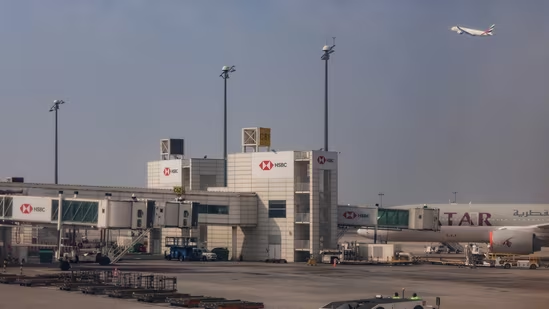
Tensions in West Asia intensified after two drones fell near Dubai International Airport in Dubai, leaving four people injured, including an Indian national. The incident was confirmed by the Dubai Media Office in a statement posted on social media, highlighting the growing security risks in the region amid escalating military confrontations.
According to the Ministry of Defence (United Arab Emirates), the country’s air defence systems are actively intercepting missiles and drones launched from Iran. The attacks come as Iran retaliates against strikes carried out by United States and Israel on its territory.
Iran has reportedly launched multiple waves of missiles and drones targeting several Gulf countries, including United Arab Emirates, Bahrain and Qatar. These attacks have raised serious concerns about regional security, infrastructure safety and potential disruptions to global energy markets.
UAE Shuts Down Major Oil Refinery
Amid the rising tensions, authorities in the UAE have taken precautionary measures by shutting down one of the world’s largest oil refining facilities. The refinery located in Ruwais Industrial City in the emirate of Abu Dhabi halted operations after a nearby drone strike caused a fire in the industrial area.
Officials said the closure was carried out as a safety precaution to avoid further damage and ensure worker safety. The refinery is operated by the state-owned energy company Abu Dhabi National Oil Company (ADNOC).
ADNOC describes the Ruwais facility as the world’s fourth-largest single-site refinery, making the shutdown a significant development for regional oil production. Industry observers say any prolonged disruption at such a large facility could influence global energy supply chains.
Meanwhile, Saudi Aramco, the world’s largest oil company based in Saudi Arabia, has warned that the escalating conflict could have serious consequences for global oil supplies and energy prices.
UAE Assures Six-Month Strategic Stockpile
In response to concerns about possible shortages, the UAE Ministry of Economy and Tourism announced that the country maintains a strategic reserve of essential goods sufficient for at least six months.
Authorities said they have stepped up monitoring across retail markets nationwide to ensure price stability and adequate supply of essential commodities. Additional stocks of products that had recently seen price increases have also been dispatched to markets to maintain consistent availability.
Officials stressed that these measures are intended to reassure residents and businesses that supply chains remain stable despite the ongoing geopolitical tensions in the region.
Security analysts warn that if the conflict continues to escalate, it could lead to further disruptions in aviation, oil production and trade routes across the Gulf, with ripple effects on global markets.