
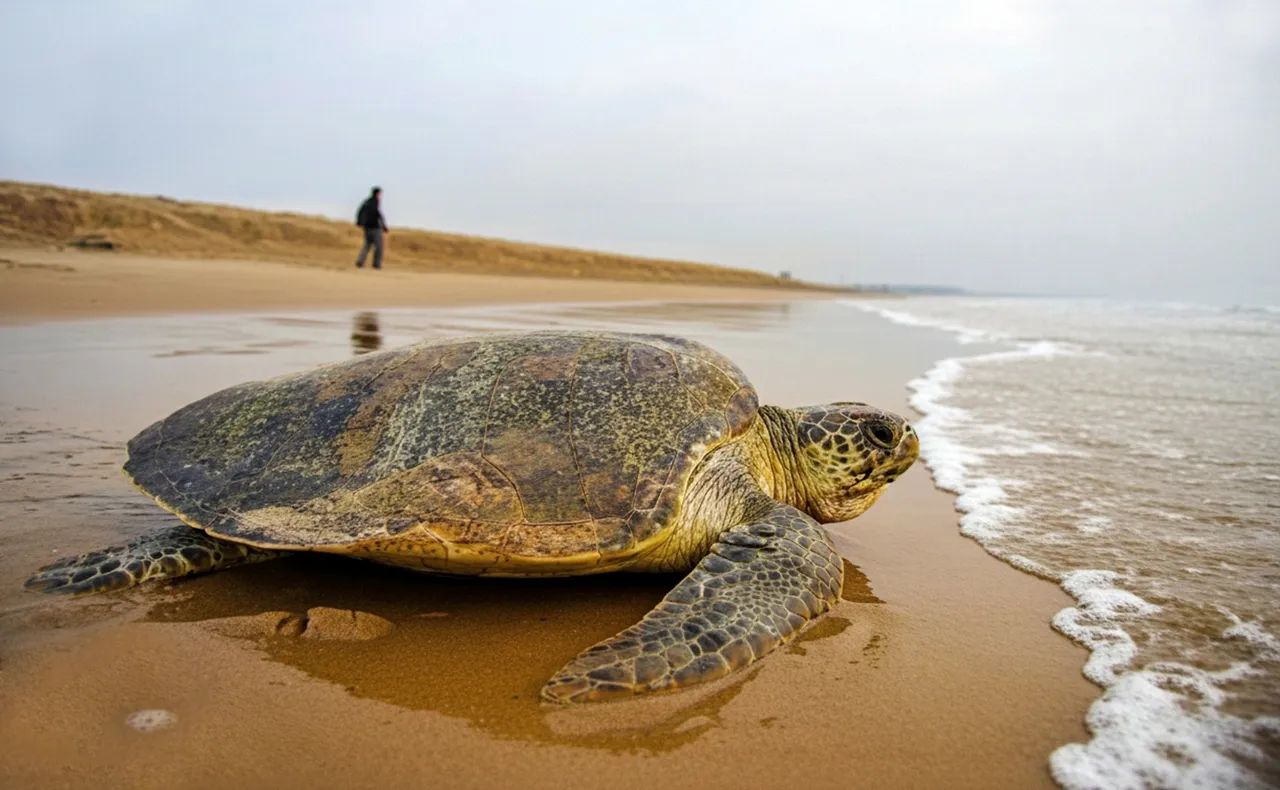
In a rare and encouraging development for marine conservation, an Olive Ridley sea turtle has laid eggs for the first time at the Blue Flag Beach, officials said on Sunday.
According to sources, the turtle arrived at the beach late on Saturday night and laid 114 eggs. Beach staff closely monitored the nesting site throughout the night to ensure the eggs remained undisturbed.
The following morning, the eggs were handed over to officials of the Odisha Forest Department for further protection and care.
First Recorded Nesting at Puri’s Blue Flag Beach
Wildlife enthusiasts and conservation authorities have welcomed the development, as it marks the first recorded instance of an Olive Ridley turtle nesting at the Blue Flag Beach in Puri. The event is being seen as a positive sign for marine biodiversity along the Odisha coastline.
Hatcheries Set Up Along the Coast
To support safe nesting of Olive Ridley turtles, authorities have already established at least 13 hatcheries along the coast between the Devi River mouth and Puri. These hatcheries help protect the eggs until they hatch and prevent damage from predators or human activity.
Forest officials have also taken several steps to ensure that turtles can safely reach the shore and lay their eggs without disturbance.
Fishing Ban to Protect Turtles
Well ahead of the nesting season, the Odisha government imposed a seven-month ban on marine fishing from November 1, aimed at protecting the endangered species during their breeding period. The ban will remain in force until May 31.
Under the directive, fishing within 20 kilometres of the coastline has been strictly prohibited. The restriction also applies to the river mouths of the Rushikulya River mouth, Dhamra River mouth and Devi River mouth, which are among the three major mass nesting sites for Olive Ridley turtles along the Odisha coast.
Conservationists say the successful nesting at Puri’s Blue Flag Beach reflects the positive impact of sustained protection measures and continued efforts to safeguard this vulnerable marine species.