
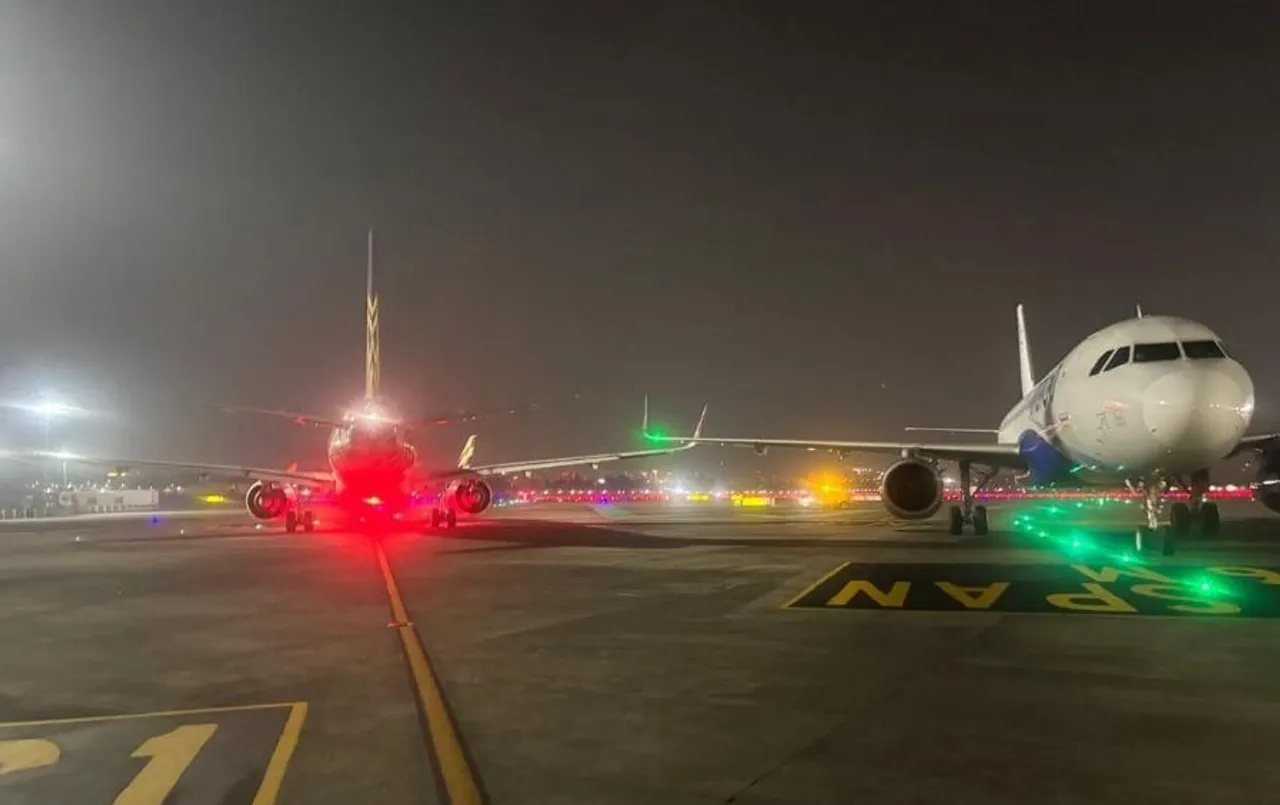
Mumbai: Two passenger aircraft operated by Air India and IndiGo were involved in a ground collision at Chhatrapati Shivaji Maharaj International Airport (CSMIA) on Tuesday, triggering concerns over safety at one of India’s busiest aviation hubs. The incident occurred during routine ground operations when the wingtips of both aircraft came into contact.
According to initial details, Air India flight AI 2732, scheduled to fly from Mumbai to Coimbatore, was in the process of pushing back from its parking bay, while IndiGo flight 6E 791, arriving from Hyderabad, was taxiing after landing. During these simultaneous movements, the aircraft wingtips touched, causing damage to the wingtip of the Air India aircraft. Both flights were carrying passengers at the time of the incident.
Passengers Disembarked Safely
Confirming the incident, an Air India spokesperson said that all passengers onboard flight AI 2732 were safely disembarked, and no injuries were reported.
“Flight AI2732 operating from Mumbai to Coimbatore on February 3 was delayed after it came into contact with another airline’s aircraft while waiting on the taxiway prior to departure. The wingtips of the two aircraft made contact, resulting in damage to our aircraft’s wingtip,” the statement said.
Details Awaited, Probe Likely
Authorities are yet to disclose the exact number of passengers onboard both aircraft, the extent of damage, or whether the IndiGo aircraft sustained any structural impact. Aviation officials are expected to conduct a detailed assessment and investigation to determine the sequence of events and ensure compliance with safety protocols.
Ground Collisions: Rare but Possible at Busy Airports
While ground collisions are relatively rare, they can occur during pushback and taxiing operations, particularly at high-traffic airports like Mumbai. Such incidents often involve wingtip strikes due to limited space and dense aircraft movement.
Although no injuries were reported and passenger safety was ensured, the incident once again highlights the need for precise ground coordination, air traffic control oversight, and strict adherence to taxiing procedures to prevent similar occurrences in the future.