
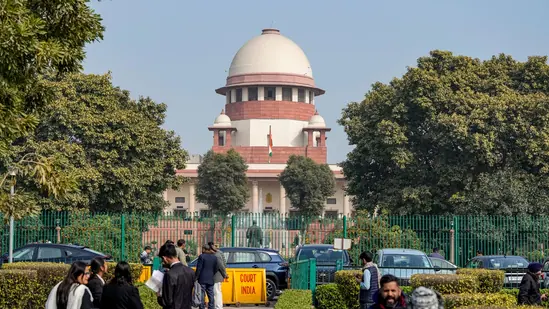
New Delhi: The Supreme Court of India on Thursday reserved its verdict on a batch of petitions seeking modifications and clearer guidelines in the long-pending stray dogs management case, marking a crucial development in one of the country’s most sensitive public safety and animal welfare debates.
A three-judge bench comprising Justice Vikram Nath, Justice Sandeep Mehta, and Justice N.V. Anjaria heard extensive arguments from multiple stakeholders, including animal rights activists, dog lovers, victims of dog bite incidents, lawyers representing the Union government, and counsels for various state governments. After the conclusion of arguments, the apex court directed all parties to submit their written briefs within one week, following which the matter will be taken up for final consideration.
States Present Compliance Measures
During the proceedings, the court examined the measures undertaken by several states, including Punjab, Tamil Nadu, Uttar Pradesh, and Rajasthan, on the implementation of stray dog control policies. These included details on animal birth control (ABC) programmes, vaccination drives, shelter facilities, and local-level monitoring systems aimed at addressing both public safety concerns and animal welfare obligations.
The bench also heard submissions from the National Highways Authority of India (NHAI), which outlined steps being taken to remove stray dogs from national highways and ensure proper fencing of roads to prevent accidents and ensure commuter safety.
Focus on Animal Welfare Infrastructure
In a significant direction, the Supreme Court instructed the Animal Welfare Board of India (AWBI) to expedite the processing of applications filed by NGOs seeking permission to establish animal shelters and animal birth control (ABC) facilities. The move is aimed at strengthening institutional capacity for humane management of the stray dog population across urban and rural areas.
Balancing Public Safety and Animal Rights
The case reflects the growing complexity of managing stray dog populations in India, where public safety, urban governance, and animal rights intersect. Victims of dog bite incidents have demanded stronger enforcement mechanisms and accountability, while animal welfare groups continue to stress humane, scientific and non-violent population control methods.
The Supreme Court’s decision is expected to have nationwide policy implications, potentially shaping future frameworks for municipal governance, animal welfare enforcement, and public safety standards across India.
With written submissions now awaited, the final verdict is expected to provide clarity on regulatory authority, implementation responsibility, and legal standards for stray dog management, a matter affecting millions of citizens across the country.