
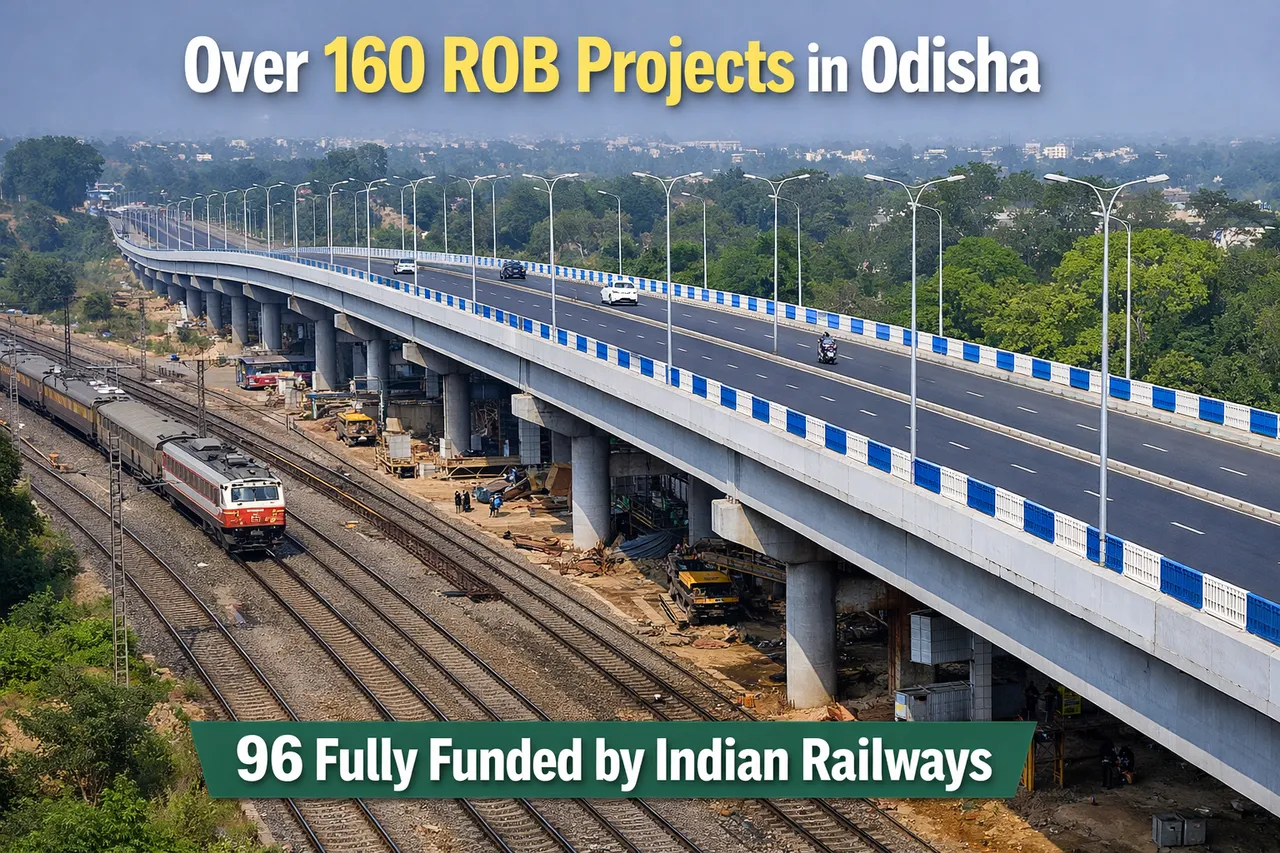
In a major infrastructure and road safety push, the Odisha government has accelerated efforts to replace accident-prone railway level crossings with Road Over Bridges (ROBs) across the state, aiming to improve commuter safety, reduce traffic congestion, and ensure smoother transportation networks.
Under the Railway Policy–2024, the Indian Railways has agreed to construct 96 Road Over Bridges entirely at its own cost, as part of a broader national plan involving 166 ROB projects. This move is expected to significantly ease the financial burden on the state government while fast-tracking execution.
High-Level Review Meeting in Bhubaneswar
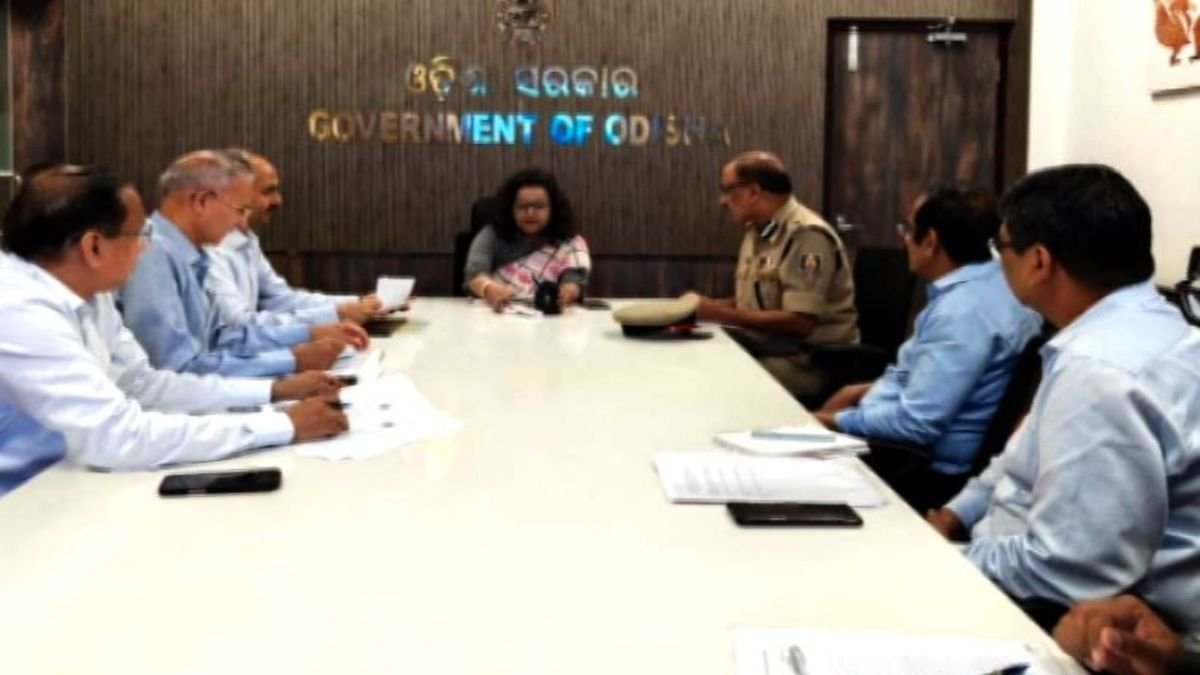
Senior officials from the East Coast Railway and the Odisha government’s Works Department, Odisha held a high-level review meeting in Bhubaneswar to assess progress and identify implementation bottlenecks. The meeting was chaired by Sanjay Kumar Singh, Principal Secretary of the Works Department.
Officials acknowledged that ROB construction had lagged behind in previous years due to land acquisition delays, coordination challenges, and funding issues. To address this, the state government is finalising a Memorandum of Understanding (MoU) under which ECoR will fully fund the construction of 96 ROBs, marking a major policy shift in infrastructure financing.
Odisha Emerges as National Leader in ROB Implementation
With this initiative, Odisha has positioned itself as one of the leading states in India in adopting the revised ROB framework under the new railway policy. Officials described the programme as a model of Centre–State coordination, aligning railway infrastructure development with state-level urban and rural connectivity goals.
Why ROBs Are Crucial for Odisha
Authorities highlighted the multiple benefits of replacing level crossings with ROBs:
-
Enhanced road safety by eliminating collision-prone railway crossings
-
Reduced traffic congestion in urban and semi-urban areas
-
Shorter travel times for commuters and freight transport
-
Improved emergency response mobility
-
Uninterrupted rail and road movement, boosting logistics efficiency
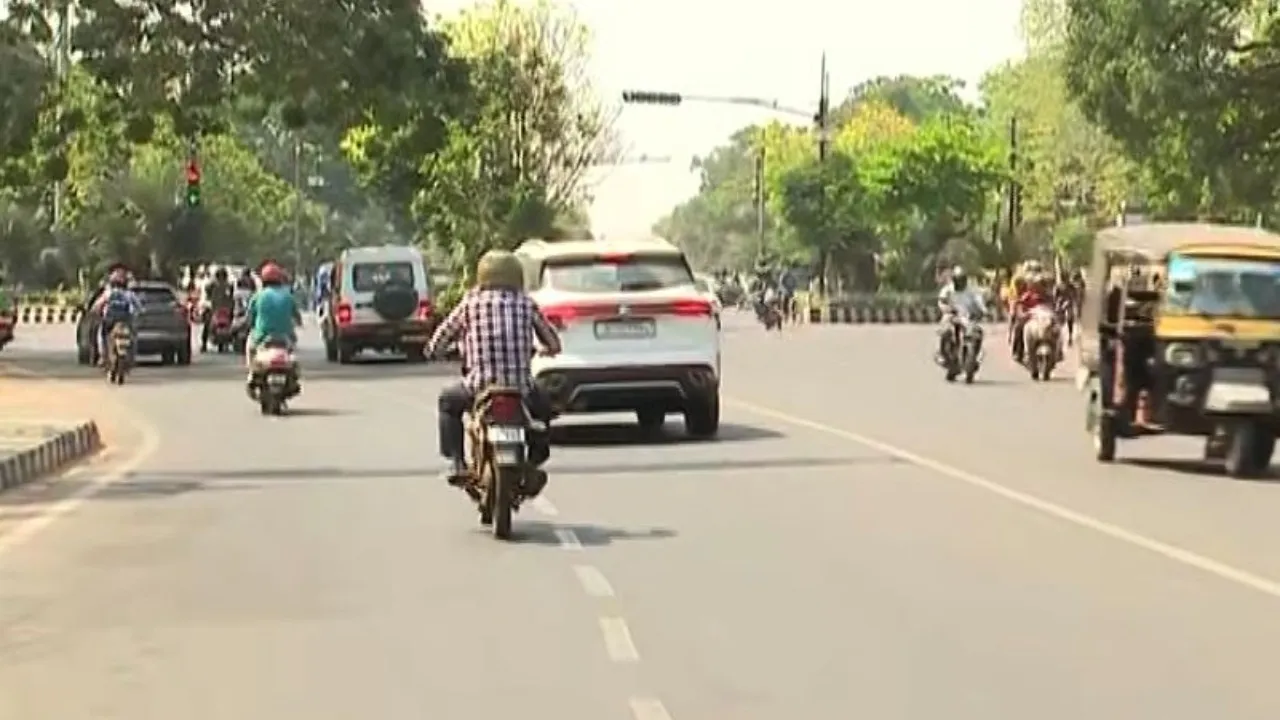
Level crossings have long been identified as high-risk accident zones, especially in densely populated regions and market areas. The ROB programme directly addresses this long-standing safety concern.
Focus on Land Acquisition, Quality and Deadlines
The review meeting focused on:
-
Speeding up land acquisition for approach roads
-
Ensuring construction quality standards
-
Strict project timelines for completion
-
Inter-departmental coordination
To strengthen execution, nodal officers have been ordered to manage land acquisition for approach roads of 112 ROBs, while district administrations have been instructed to work in close coordination with the Works Department and the Railways.
Strategic Infrastructure Vision
Officials described the ROB expansion as part of a larger mobility and infrastructure modernisation strategy, aligned with:
-
Smart city development
-
Industrial corridor connectivity
-
Tourism infrastructure growth
-
Freight and logistics efficiency
-
Urban traffic decongestion
Once completed, the ROB network is expected to transform road-rail integration in Odisha, making daily commuting safer and faster for lakhs of citizens.
The state government has reiterated its commitment to time-bound execution, strict monitoring, and high-quality construction standards, ensuring that the ROB programme delivers long-term safety, economic, and mobility benefits for Odisha.