
Train travel in India is set to become marginally more expensive from December 26, with the Indian Railways announcing a revised passenger fare structure that raises ticket prices for longer journeys while leaving short-distance and suburban travel untouched. The move marks one of the more significant fare rationalizations in recent years and is expected to generate an additional ₹600 crore in annual revenue, according to railway officials.
What Changes for Passengers
Under the revised fare structure, passengers travelling up to 215 km in Ordinary Class will not see any increase in ticket prices. However, for journeys beyond this distance, Ordinary Class fares will rise by 1 paisa per kilometer.
For Mail and Express trains, both non-air-conditioned and air-conditioned classes will attract a 2 paise per kilometer hike. Railways officials explained that the increase is modest in absolute terms. For instance, a 500 km journey in a non-AC coach will now cost ₹10 more than before.
Officials emphasized that the fare revision has been designed to balance affordability with the Railways’ growing financial requirements. “The idea is not to burden passengers, but to ensure financial sustainability while maintaining service quality,” a senior official said.
Suburban and Short-Distance Travel Protected
In a key relief for daily commuters, suburban train fares and monthly season tickets remain unchanged. This decision is aimed at safeguarding low- and middle-income passengers who rely heavily on local trains for daily travel, particularly in metropolitan regions such as Mumbai, Kolkata, Chennai and Delhi.
The Railways reiterated that protecting frequent commuters and essential short-distance travel was a central consideration while restructuring fares.
Rising Costs Drive Fare Rationalization
The fare hike comes amid steadily rising operational and manpower costs. According to official figures, manpower expenses have climbed to ₹1.15 lakh crore, while pension liabilities stand at ₹60,000 crore. Overall operational costs touched ₹2.63 lakh crore in the 2024–25 financial year.
Railway officials said the additional revenue from passenger fares would help partially offset these expenses, alongside efforts to boost earnings through higher freight loading and improved efficiency.
Festive Season Push: 244 Special Trains Announced
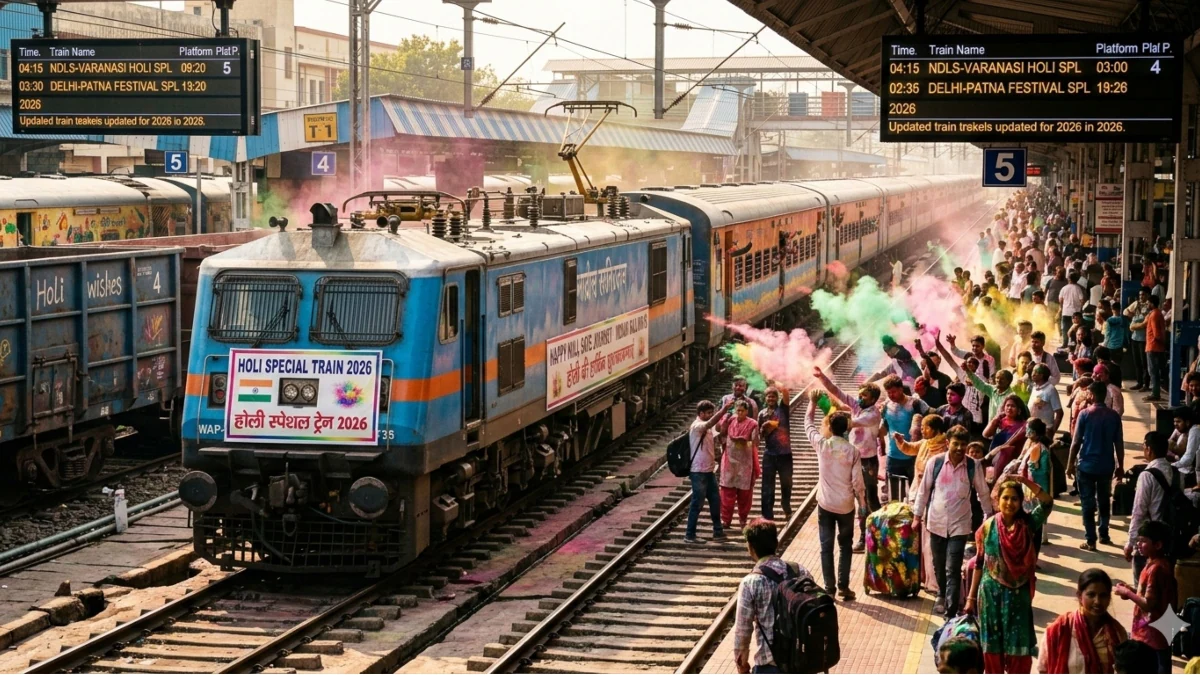
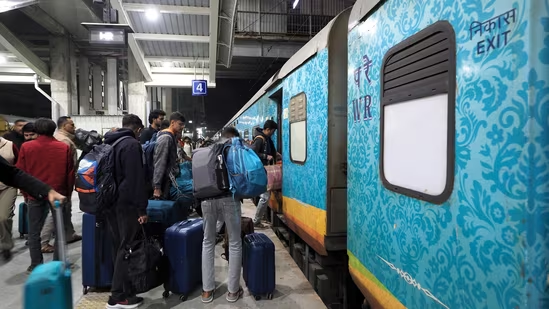
Alongside the fare revision, Indian Railways has rolled out a major operational push to handle the festive travel rush during Christmas and the New Year. As many as 244 special train trips will be operated across eight railway zones to manage the expected surge in passenger traffic, according to details shared by the ministry and reported by The Economic Times.
Special services are being run on heavily travelled corridors connecting Delhi, Howrah and Lucknow. The popular Mumbai–Goa Konkan route will see daily and weekly special trains between Mumbai CSMT or Lokmanya Tilak Terminus (LTT) and Karmali or Madgaon. Additional special trains have also been introduced on routes such as Mumbai–Nagpur and Pune–Sanganer.
Railway officials said more special trains could be announced in the coming days as travel demand peaks closer to the year-end holidays.
Infrastructure Update: Bullet Train Project Gains Momentum
In a broader update issued on December 20, the Railways said work on the Mumbai–Ahmedabad bullet train project has gathered pace, with 100 per cent land acquisition completed in Maharashtra. The project is a flagship infrastructure initiative aimed at transforming long-distance travel in the country.
What It Means for Travellers
For most passengers, the immediate impact of the fare hike will be felt at ticket counters and online booking platforms from December 26, particularly for longer journeys. While the increase is relatively small per kilometer, it comes just ahead of the busy year-end travel season, making planning and early booking even more important for travellers.
Indian Railways maintains that the revised fares strike a careful balance between affordability for passengers and the financial sustainability needed to run one of the world’s largest rail networks.