
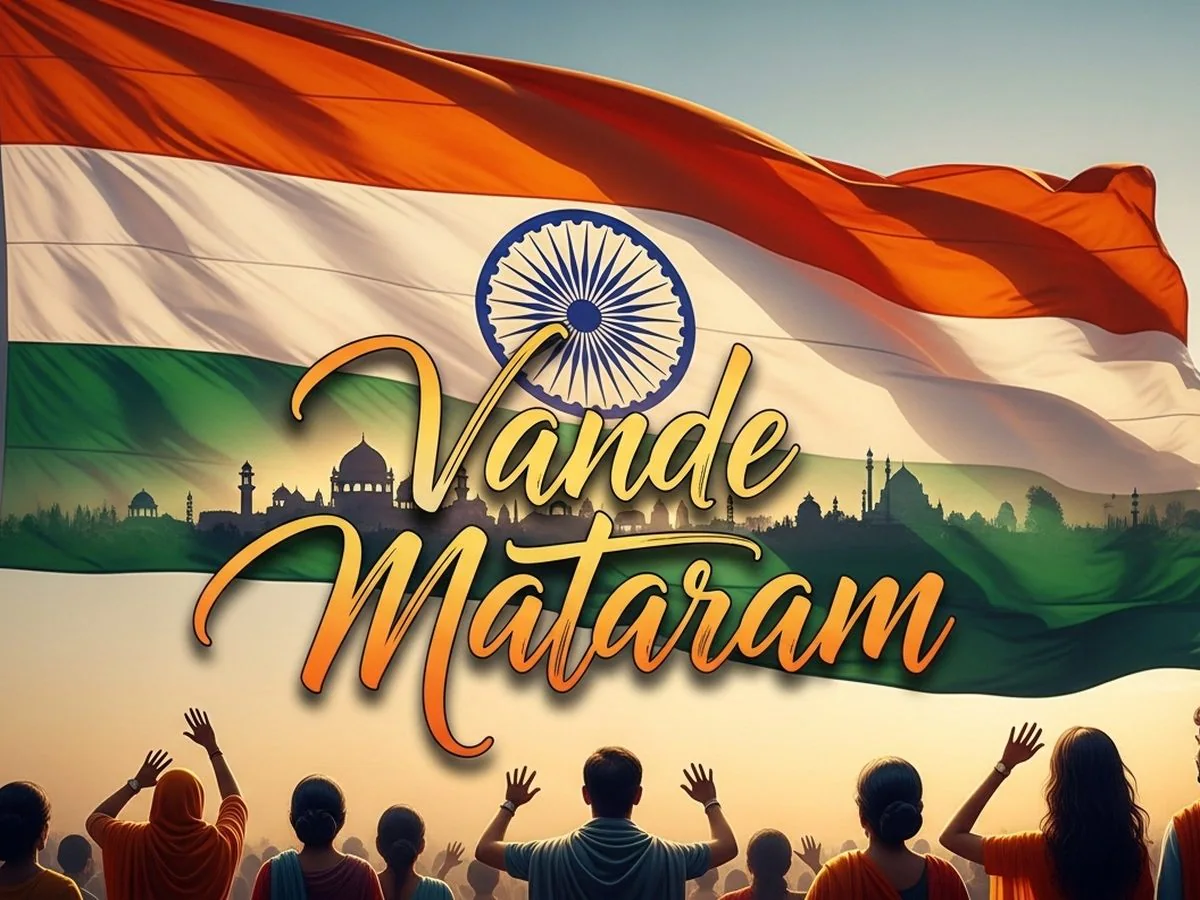
New Delhi, November 7, 2025: India today commemorates 150 years of its National Song — Vande Mataram, a hymn that has stirred generations with its message of devotion, unity, and patriotism. Composed by Bankim Chandra Chatterjee in 1875 and later included in his revolutionary novel Anandamath (1882), Vande Mataram transcended literature to become an immortal symbol of India’s national identity and freedom movement.
From Literature to National Legacy
First published in the literary journal Bangadarshan on November 7, 1875, Vande Mataram was set to music by Rabindranath Tagore and first sung at the Indian National Congress session in Calcutta in 1896. Its patriotic spirit resonated deeply during the Swadeshi Movement of 1905, when thousands in Kolkata raised the slogan “Vande Mataram!” in protest against the partition of Bengal.
What began as a literary creation soon became the anthem of India’s awakening, inspiring leaders, revolutionaries, and citizens alike.
“Religion of Patriotism”: The Spirit of Anandamath
In Anandamath, Chatterjee envisioned a band of monks, or Sanyasins, who dedicate their lives to freeing the motherland from oppression. They worship India as the Mother Goddess, and Vande Mataram becomes their sacred hymn.
Philosopher Sri Aurobindo later described this portrayal as a “religion of patriotism,” where love for the motherland equaled spiritual devotion — a message that deeply influenced India’s freedom struggle.
A Song of Defiance and Unity
By the early 20th century, Vande Mataram had evolved into a rallying cry of resistance. Processions, public recitals, and Prabhat Pheris echoed the song across towns and villages. The British Raj, alarmed by its unifying power, attempted to ban its public recitation and penalize students for singing it.
But each restriction only magnified its impact — transforming Vande Mataram into a symbol of defiance and collective courage.
Inspiring the World: A Global Anthem
The influence of Vande Mataram crossed borders. In 1907, freedom fighter Madam Bhikaji Cama unfurled the tricolor flag in Berlin inscribed with the words Vande Mataram. Indian patriots abroad — from Europe to South Africa — adopted it as a battle cry for justice and independence.
Through publications, speeches, and marches, the song became a global voice of India’s struggle against colonialism.
National Recognition and Immortal Honor
In 1950, the Constituent Assembly of India officially recognized Vande Mataram as the National Song, giving it equal status with Jana Gana Mana, the National Anthem.
Then-President Dr. Rajendra Prasad hailed it as “a hymn that inspired India’s freedom” — a tribute to its role in shaping the nation’s destiny.
150 Years of Glory: Celebrations Across India
To mark this historic milestone, nationwide celebrations have been organized under the theme “Vande Mataram @150: Eternal Spirit of the Nation.”
The national-level inaugural ceremony will take place at Delhi’s Indira Gandhi Stadium, featuring:
-
Live performances by prominent Indian musicians and classical artists
-
The release of a commemorative postage stamp and coin
-
A multimedia exhibition on Vande Mataram’s journey through India’s history
-
Screenings of short films highlighting its influence on art, culture, and freedom
Throughout the year, the government will host:
-
Radio and television retrospectives
-
Cultural evenings at Indian missions worldwide
-
Patriotic murals and tree-plantation drives
-
A global music festival celebrating India’s creative heritage
Social media campaigns with the hashtag #150YearsOfVandeMataram will invite citizens to share renditions, essays, and memories linked to the song.
A Living Legacy
As India celebrates 150 years of Vande Mataram, the song remains a living testament to the country’s spirit — a blend of art, devotion, and patriotism that continues to inspire millions.
From its literary roots in the 19th century to its central place in modern India’s cultural consciousness, Vande Mataram stands as a symbol of unity, sacrifice, and the eternal bond between the people and their motherland.