

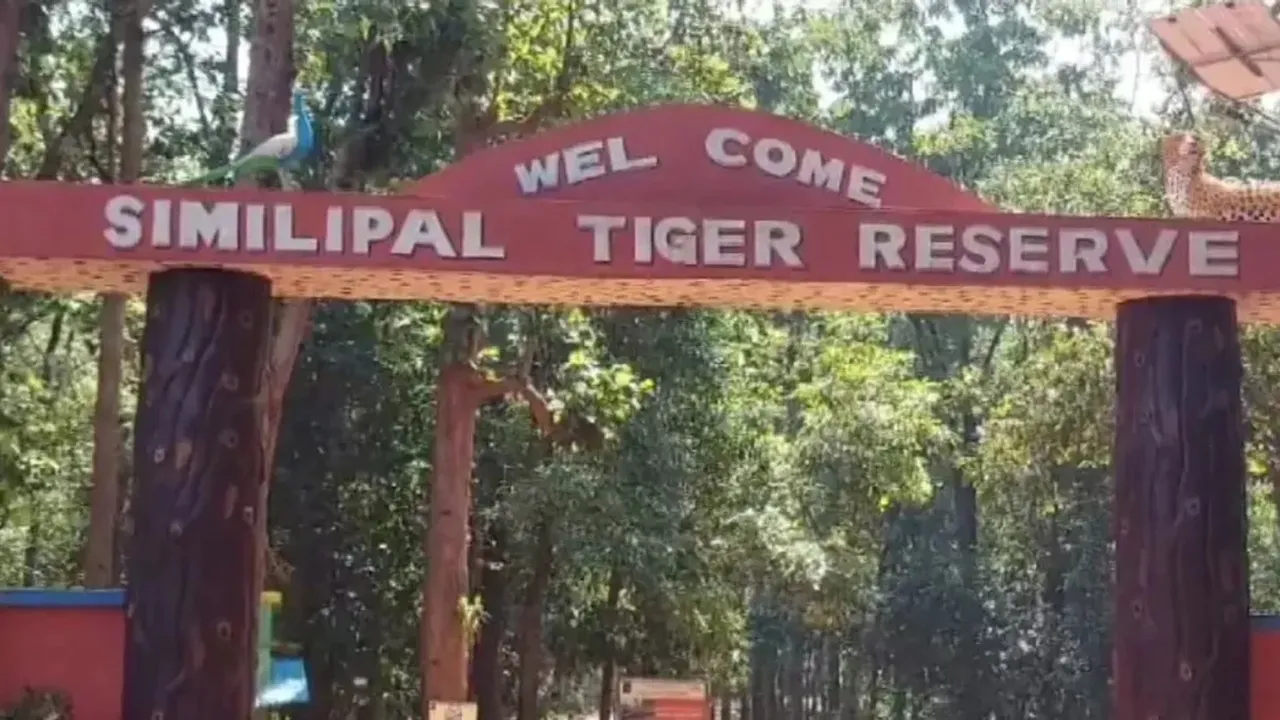
The Similipal Tiger Reserve in Odisha’s Mayurbhanj district reopened to visitors on Saturday, marking the start of the new tourist season after a prolonged monsoon closure. The reopening was delayed this year due to extended rainfall, which slowed down road restoration and other preparatory works inside the reserve.
Tourist Entry and Timings Revised
As per the revised guidelines, only 60 vehicles will be allowed entry into the reserve each day — 35 from Jashipur gate and 25 from Pithabata check gate near Baripada.
-
Entry Timings:
-
Jashipur Gate: 5 AM to 9 AM
-
Pithabata Gate: 8 AM to 9 AM
-
-
Exit Time: Before 6 PM
Only vehicles with a minimum ground clearance of 180 mm are permitted, ensuring smooth passage through the park’s rugged terrain. Heavy vehicles remain prohibited to prevent damage to forest trails.
Mandatory Guide, Undertaking & Rules
Every visitor must:
-
Present valid ID proof,
-
Submit a written undertaking pledging adherence to park rules, and
-
Hire a registered guide for the safari.
Any violation of the norms will attract penalties under the Wildlife (Protection) Act, 1972. Officials clarified that these measures aim to balance tourism with wildlife conservation by minimising human disturbance in the core and buffer zones.
Improved Facilities for Visitors
Ahead of the reopening, around 1,000 km of internal roads damaged during monsoon rains were repaired. Tourists can now explore major eco-tourism destinations such as Jamuani, Barehipani, Gurguria, Kumari, and Ramtirtha within the buffer areas.
Safari schedules have also been standardised:
-
Morning Safari: 5:30 AM – 10:30 AM
-
Afternoon Safari: 2 PM – 6 PM
About Similipal Tiger Reserve
The Similipal Tiger Reserve, spread over 2,750 sq km, is India’s fourth-largest tiger reserve and the only known habitat of melanistic (black-striped) tigers in the world. Apart from tigers, the reserve is home to elephants, leopards, bisons, and over 300 species of birds, making it one of India’s most biodiverse ecosystems.
The reopening is expected to boost eco-tourism and local livelihoods, drawing wildlife enthusiasts, photographers, and researchers from across the country and abroad.