
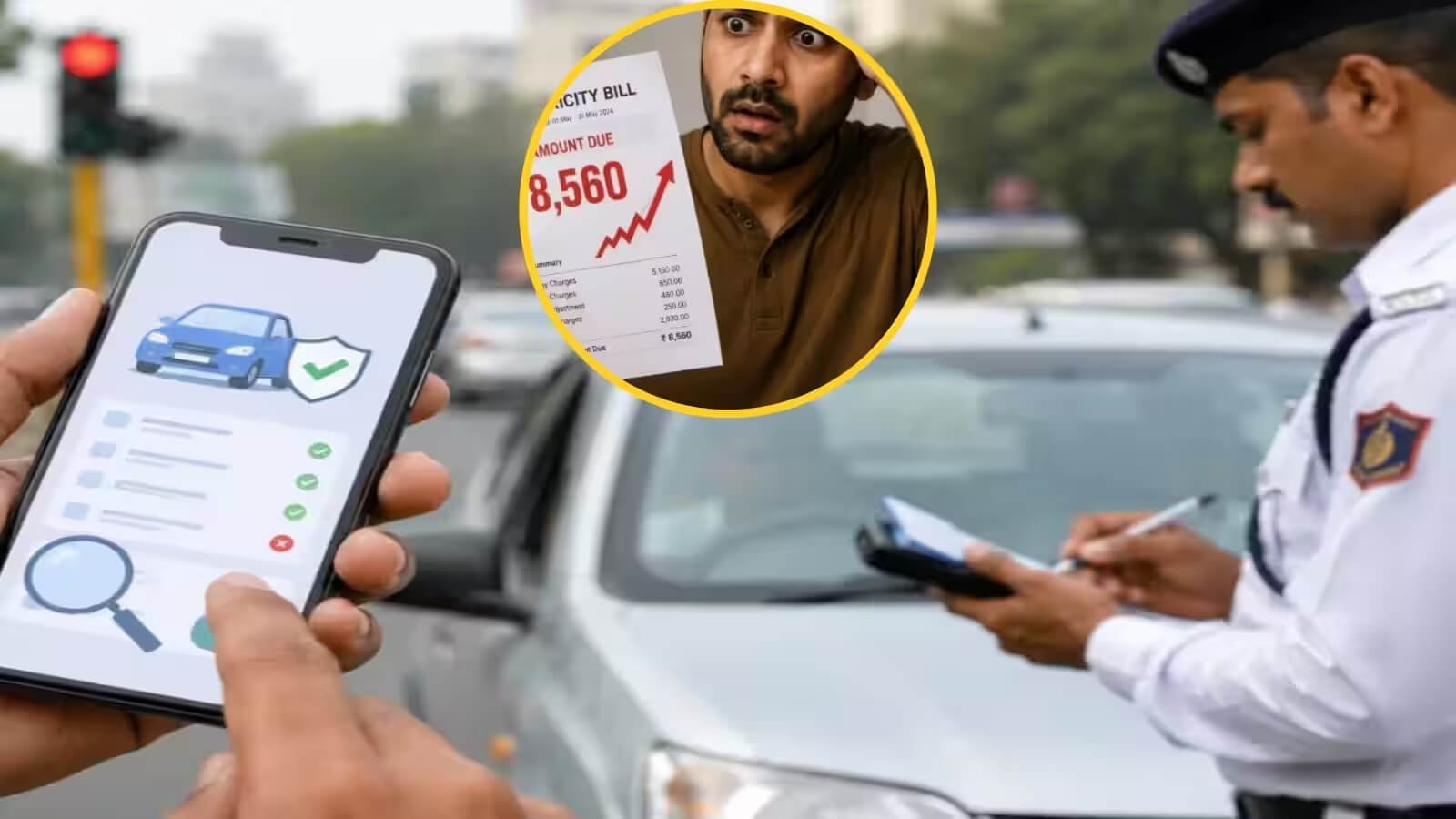
New Delhi: The Supreme Court has suggested exploring stronger mechanisms to recover unpaid traffic e-challans, including the possibility of linking outstanding traffic fines to electricity bills. The suggestion came after the court was informed that a large amount in traffic penalties remains unpaid across states and Union Territories.
A Bench comprising Justices J.B. Pardiwala and K.V. Viswanathan was hearing a matter concerning systemic reforms in road safety, traffic enforcement and post-accident victim care.
Around ₹20,000 Crore in E-Challan Dues Pending
During the hearing, the Supreme Court was informed that states and Union Territories have around ₹45,000 crore in e-challan dues, of which approximately ₹25,000 crore has been recovered, leaving nearly ₹20,000 crore still outstanding.
The Bench observed that merely issuing large numbers of e-challans does not address the enforcement problem if the fines are not subsequently recovered.
The court suggested that authorities explore practical mechanisms that could improve compliance and ensure that unpaid penalties are eventually collected.
Court Suggests Linking Challans With Electricity Bills
One of the suggestions discussed during the hearing was to add unpaid traffic challan amounts to electricity dues.
Justice J.B. Pardiwala suggested that authorities could examine whether linking the two types of dues could provide an effective recovery mechanism, given the consequences associated with non-payment of electricity bills.
Importantly, this was a suggestion from the court for authorities to explore, not an order that unpaid traffic fines have already been linked to electricity bills nationwide.
More Measures Discussed for Unpaid Challans
The Bench also discussed several other possible measures against vehicles with outstanding traffic penalties.
These included:
- Blacklisting vehicles with unpaid challans on the Parivahan portal.
- Restricting ownership transfers until outstanding fines are cleared.
- Considering restrictions on certain vehicle-related documents and renewals.
- Conducting random vehicle checks to identify vehicles carrying unpaid challans.
- Considering vehicle impounding where authorities find unpaid e-challans during such checks.
The court also discussed possible restrictions involving registration renewals, fitness certificates, PUC certificates and driving-licence-related services for vehicles or individuals with unresolved challans.
Focus on Recovery Rather Than Issuing Challans
The hearing highlighted the gap between the number of traffic violations being recorded electronically and the actual recovery of the penalties imposed.
The Supreme Court stressed that authorities need to consider how enforcement can work effectively on the ground rather than relying solely on the issuance of e-challans.
The suggestions are part of the court’s broader consideration of road safety, traffic enforcement and post-accident systems.
What Happens Next?
The proposals discussed by the Supreme Court will require consideration and implementation by the relevant authorities. The electricity-bill linkage in particular remains an idea suggested during the hearing, rather than a nationwide system currently in force.
Further proceedings in the case are expected to examine mechanisms through which states and Union Territories can improve recovery of outstanding traffic penalties and strengthen enforcement.