
India has approved the export of up to 654 megawatts (MW) of electricity to Nepal for 18 hours every day until December 31, 2026, as the neighbouring country struggles with a severe power shortage following devastating floods that damaged critical hydropower infrastructure.
The decision, announced by the Ministry of Power, is aimed at helping Nepal meet its immediate electricity requirements while several hydropower projects remain affected by the disaster. The arrangement took effect from September 13 and will allow Nepal to receive electricity between midnight and 6 pm each day.
The move also underlines the longstanding energy partnership between India and Nepal at a time when the Himalayan nation is dealing with one of its most serious infrastructure crises in recent years.
India To Supply Up To 654 MW Daily
Under the approved arrangement, Nepal can receive a maximum of 654 MW through two major transmission corridors.
Up to 600 MW will be transmitted through the Muzaffarpur-Dhalkebar 400 kV double-circuit line, while another 54 MW will be supplied through the Tanakpur-Mahendranagar 132 kV line.
The electricity will be supplied to the Nepal Electricity Authority (NEA) for 18 hours a day. The quantity of electricity to be supplied from January 2027 will be reviewed by the Indian government in December.
The Ministry of Power said the decision would help Nepal meet its electricity requirements during the difficult period while further strengthening the close and longstanding energy cooperation between the two countries.
Devastating Floods Damaged Nepal’s Hydropower Sector
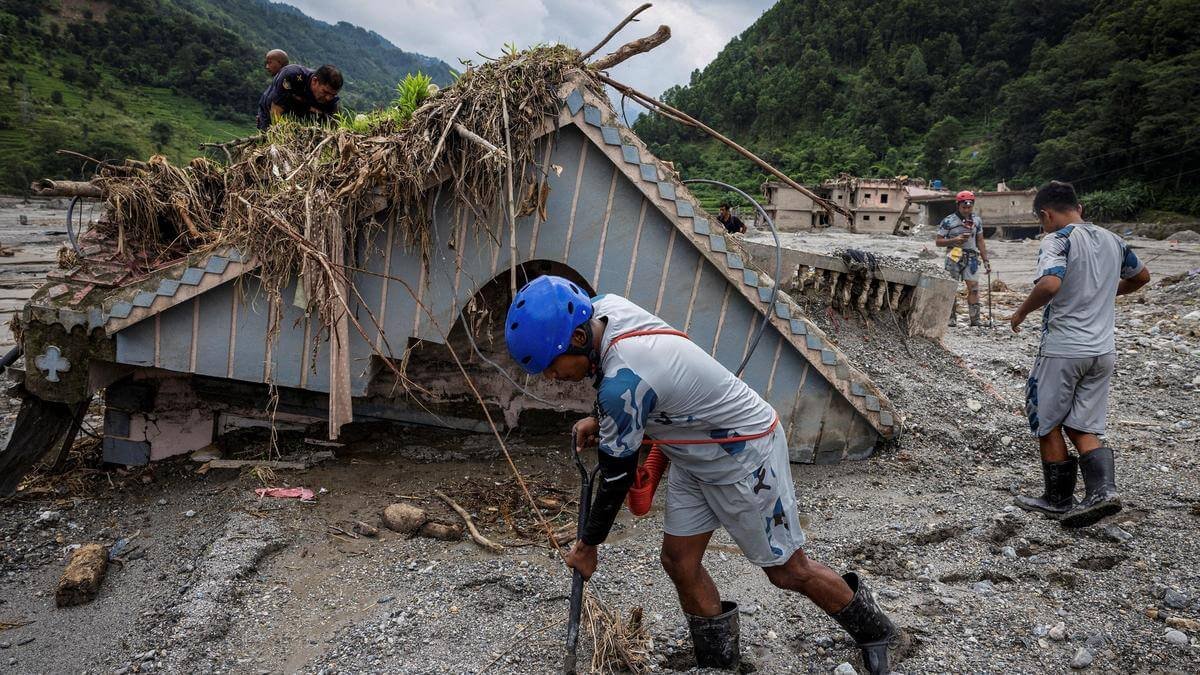
The electricity support comes after catastrophic flooding struck Nepal on August 26, following a massive glacial collapse and debris flow near the Nepal-China border.
The disaster caused widespread destruction along the Bhotekoshi and Trishuli river systems, damaging homes, roads, bridges and hydropower infrastructure.
At least a dozen hydropower projects were affected, with the disaster severely reducing Nepal’s ability to generate electricity domestically. Recent reports put the number of people still missing in Nepal at more than 5,000, while the confirmed death toll has climbed to around 1,386.
The damage has had a direct impact on Nepal’s energy security because hydropower forms the overwhelming majority of the country’s electricity generation.
Nepal Shifts From Power Exporter To Importer
Before the floods, Nepal had been using its abundant hydropower resources to meet domestic demand and export surplus electricity to neighbouring countries.
The disaster dramatically changed that situation. Damage to generating stations and transmission infrastructure reduced available generation, forcing Nepal to seek additional electricity from India to meet domestic requirements.
The August flooding also disrupted Nepal’s electricity exports, including supplies that had been routed through India to other neighbouring markets.
The crisis has highlighted the vulnerability of Nepal’s hydropower-dependent electricity system to extreme weather and large-scale geological events.
India-Nepal Energy Cooperation Gets A Boost
India’s latest decision is expected to provide important short-term support to Nepal as it works to restore damaged hydropower facilities and transmission networks.
The arrangement also reflects the increasingly interconnected nature of the electricity systems of the two neighbouring countries. Nepal has historically exported surplus hydropower to India during periods of high generation, while India has the capacity to supply electricity to Nepal when domestic production falls short.
The current crisis has effectively reversed the usual seasonal flow of electricity, making Indian imports particularly important for Nepal’s energy security.
Power Supply To Be Reviewed In December
The current approval remains valid until December 31, 2026. The Ministry of Power has indicated that the quantum of electricity to be exported from January 2027 will be reviewed in December.
The future requirement will depend largely on the pace of restoration of Nepal’s damaged hydropower infrastructure, transmission networks and generating capacity.
For now, the additional electricity from India is expected to provide Nepal with crucial support as rescue, rehabilitation and reconstruction efforts continue following the devastating floods.
Flood Disaster Raises Wider Climate Concerns
The disaster has also renewed concerns over the vulnerability of Himalayan infrastructure to extreme weather events and changing climatic conditions.
Nepal has sought substantial international assistance for reconstruction, with officials estimating that billions of dollars will be required to rebuild damaged infrastructure and restore affected communities.
The floods have further intensified discussions about the need for stronger disaster preparedness, resilient hydropower infrastructure and improved early-warning systems across the Himalayan region.
For Nepal, restoring electricity generation will be a critical part of the broader recovery process. India’s decision to provide up to 654 MW of power for 18 hours a day offers an immediate lifeline while the country works towards rebuilding its damaged energy infrastructure.