
New Delhi: As rescue and relief operations continue following the devastating flash floods in Nepal, 275 Indian nationals remain missing, while 169 Indians have been rescued so far, the Ministry of External Affairs (MEA) said on Friday.
The disaster, triggered by massive flash floods and debris flows in the Himalayan region on August 26, caused widespread destruction across Nepal and parts of Tibet, leaving thousands affected and disrupting road and bridge connectivity.
275 Indians Still Missing After Nepal Disaster
MEA spokesperson Randhir Jaiswal said Indian authorities remain in close contact with the Nepalese government, its Ministry of Home Affairs and concerned state governments in India to track missing nationals and coordinate rescue efforts.
According to the latest information shared by the ministry, the figure of 275 missing Indians also includes 49 Indian nationals reported missing in China.
Jaiswal said authorities were continuing efforts to locate those who remain unaccounted for and provide assistance to affected Indian travellers.
Three More Indians Rescued From Trishuli Bazar
Three additional Indian nationals were rescued from Trishuli Bazar, one of the areas severely affected by the floods, since Thursday.
The MEA expressed appreciation for the efforts of Nepalese authorities involved in the ongoing rescue operations.
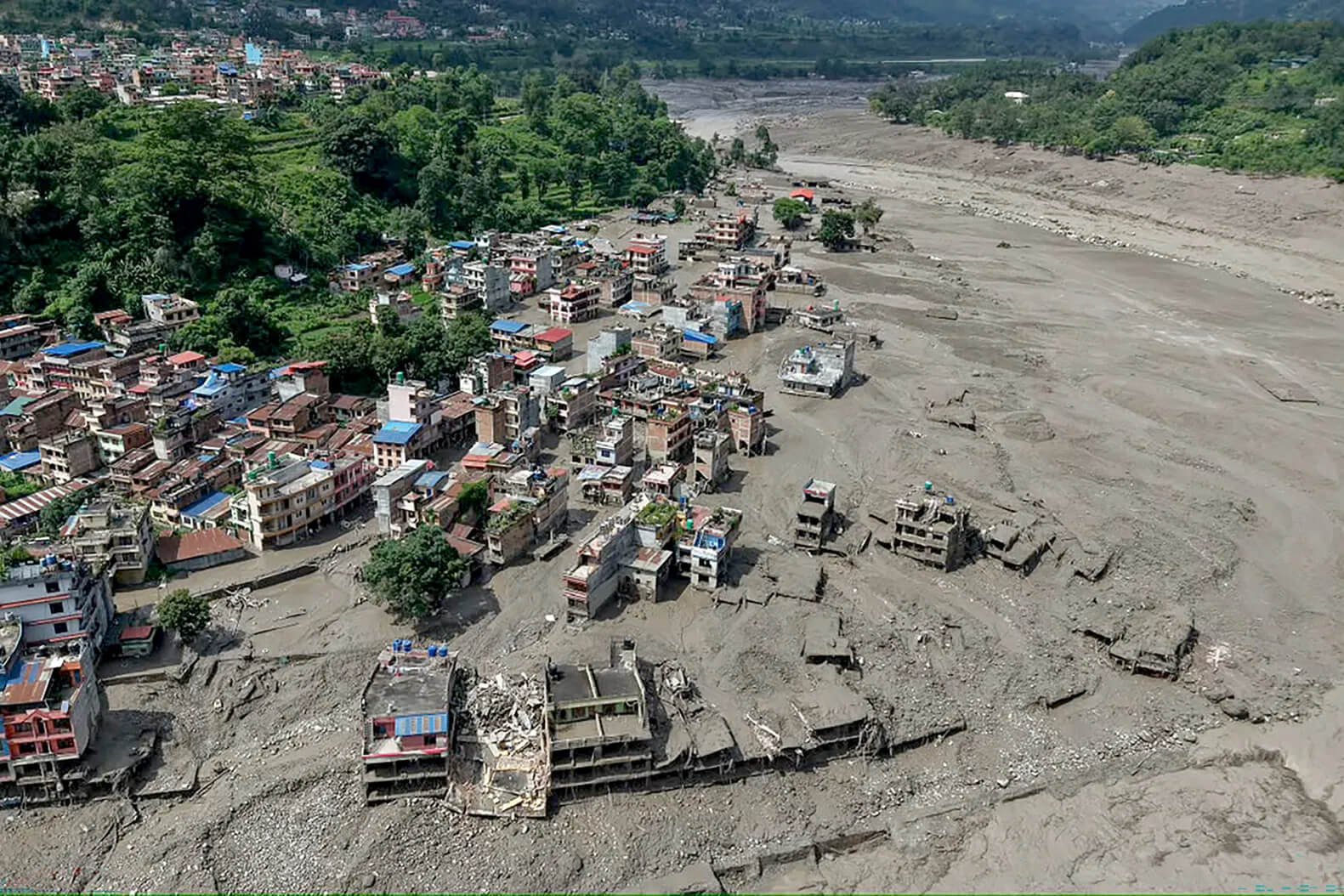
Trishuli Bazar and several settlements along the Trishuli River suffered extensive damage after floodwaters carrying huge quantities of mud, rocks and debris swept through the region.
Over 1,900 Indians Cross Into Nepal From China
The MEA also provided an update on Indian nationals who were travelling through China when the disaster struck.
As many as 1,907 Indian nationals who were in China on August 26 have safely crossed into Nepal, according to the ministry.
Importantly, Jaiswal said there were no Indian travellers still stranded in the Tibet Autonomous Region.
Indian authorities have been coordinating with counterparts in the region to facilitate the movement of stranded or affected travellers following the disruption caused by the floods.
Himalayan Disaster Leaves Widespread Destruction
The flash floods were accompanied by powerful debris flows after the partial collapse of a glacier in the Himalayan region.
The disaster struck a checkpoint near the China-Nepal border on August 26 before devastating settlements located along the Trishuli River.
The enormous flow of water, mud and rocks reportedly swept away villages, roads and bridges across parts of Nepal and Tibet. Several Himalayan communities were severely affected, with vital transport links disrupted by the destruction of infrastructure.
The scale of the disaster has made rescue and recovery operations particularly challenging, with authorities continuing to search for missing people while providing relief to survivors.
Rescue Efforts Continue Amid Difficult Conditions
The large number of missing Indian nationals has added another dimension to the ongoing humanitarian response. Indian authorities are working with Nepalese officials and state governments to verify information about missing travellers and facilitate rescue and repatriation wherever possible.
The recovery of three more Indians from Trishuli Bazar has provided a fresh boost to ongoing efforts, although hundreds remain unaccounted for.
Authorities are expected to continue monitoring the situation closely as rescue teams work through affected areas and gather information about those still missing.
India Maintains Close Coordination With Nepal
The MEA has reiterated that India remains in close contact with Nepalese authorities regarding the safety and whereabouts of Indian nationals affected by the disaster.
With 169 Indians rescued, 1,907 travellers having safely crossed from China into Nepal, and 275 still reported missing, authorities continue to focus on locating those unaccounted for and ensuring that affected Indian nationals receive necessary assistance.
The disaster has also highlighted the vulnerability of Himalayan communities and travellers to sudden flash floods and debris flows, particularly in mountainous areas where extreme weather events can rapidly disrupt roads, bridges and communication networks.