
Rising tensions in West Asia are beginning to impact India’s domestic fuel supply, sparking concerns over the availability of cooking gas across several cities. The escalating conflict involving Iran, Israel and the United States has disrupted critical global energy routes, creating uncertainty in the supply of liquefied petroleum gas (LPG) and triggering panic bookings among consumers.
India imports nearly 60% of its LPG requirements, making the country highly vulnerable to disruptions in global energy markets. As shipping constraints and price volatility intensify, households and businesses alike are facing delays in gas cylinder deliveries.
Gulf Tensions Disrupt LPG Supply Chains
Energy shipments passing through the strategically vital Strait of Hormuz—a narrow waterway linking the Persian Gulf to the Gulf of Oman—have been affected by the ongoing conflict. The strait handles a significant portion of global oil and gas shipments, and any disruption there can quickly ripple through international energy markets.
For India, the impact has been immediate. Reports from several cities indicate long queues outside LPG agencies and a surge in online bookings, as consumers rush to secure cylinders amid fears of prolonged shortages.
To manage the situation, authorities have reportedly instructed domestic refiners to increase LPG production by up to 25% and prioritise household consumption over industrial use. Despite these measures, many consumers say they are facing difficulties in booking both domestic and commercial cylinders.
Restaurants and small eateries have also expressed concern, warning that continued supply disruptions could affect daily operations and increase food costs.
Migrant Workers Turn to Traditional Cooking Methods
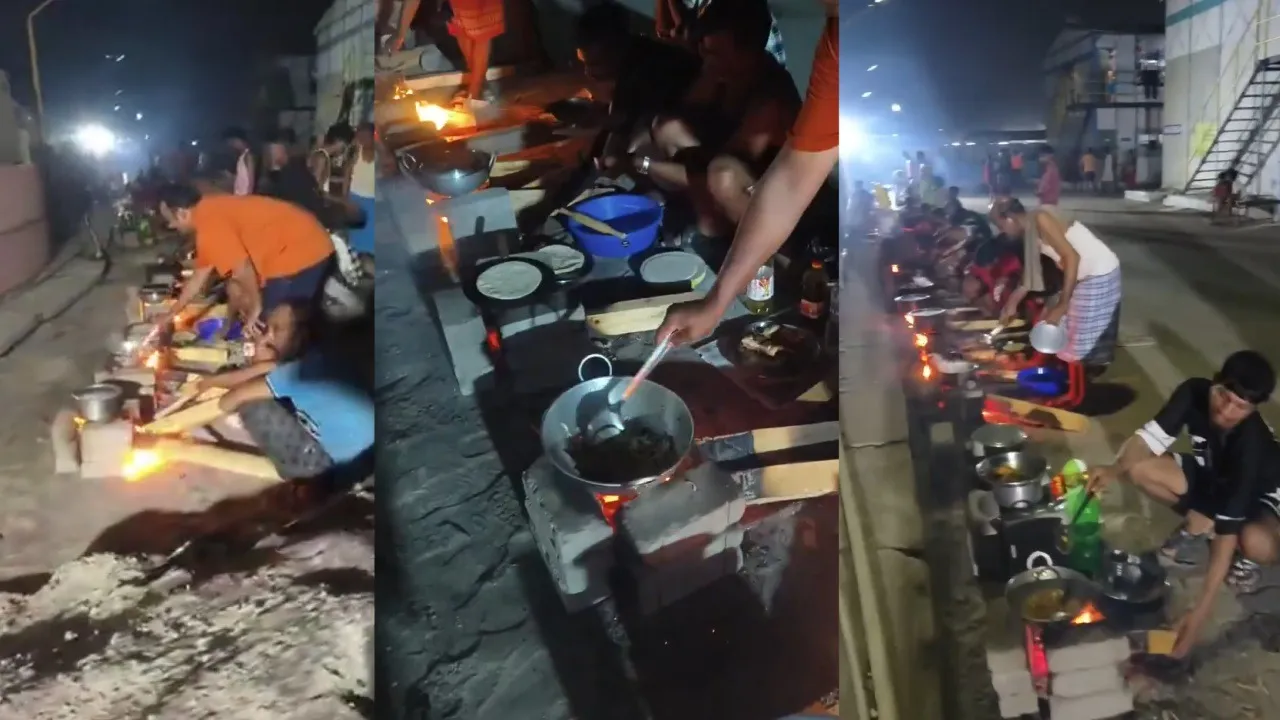
Amid the uncertainty, scenes from cities such as Chennai highlight how the crisis is affecting vulnerable communities. Several videos circulating on social media show migrant labourers returning to the use of traditional chulhas—mud or brick stoves fuelled by firewood or charcoal—to cook their meals.
Once a common sight in rural India, these traditional stoves had largely disappeared from urban spaces with the widespread adoption of LPG. However, the current supply concerns are forcing many low-income workers to rely on this age-old cooking method.
In construction camps and temporary settlements, workers can be seen preparing food over open flames, with aluminium pots placed on makeshift firewood stoves. For many daily-wage labourers, the shift back to chulhas reflects not a cultural revival but a practical response to fuel uncertainty.
India’s Energy Dependence Under Spotlight
The ongoing crisis has once again underscored India’s heavy dependence on imported energy. Experts warn that prolonged instability in West Asia could strain supply chains, push up fuel prices and affect domestic energy security.
Policy analysts suggest that the situation may prompt the government to accelerate efforts toward diversifying energy sources, boosting domestic production and expanding alternative cooking fuel options.
Until the geopolitical situation stabilises, however, thousands of migrant workers across Indian cities are quietly adapting to the crisis—returning to the humble chulah not out of tradition, but out of necessity.