
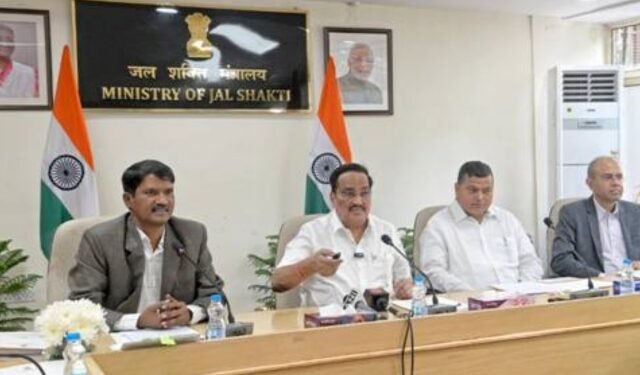
The Ministry of Jal Shakti has announced the winners of the 6th National Water Awards (NWA) 2024, recognizing 46 individuals and organisations for their outstanding efforts in sustainable water conservation and management. The announcement was made today by Union Minister of Jal Shakti Shri C.R. Paatil at Shram Shakti Bhawan, New Delhi.
While Maharashtra secured the Best State Award, Odisha drew significant attention for its exemplary grassroots initiatives, with Koraput emerging as a notable contributor to community-driven water conservation efforts. The district has been increasingly recognized for its rainwater harvesting, watershed management, and revival of traditional water bodies, showcasing Odisha’s growing leadership in sustainable resource management.
Gujarat and Haryana finished second and third respectively in the Best State category. Other award categories include Best District, Best Village Panchayat, Best Urban Local Body, Best School/College, Best Industry, Best Institution (other than school or college), Best Civil Society, Best Water User Association, and Best Individual.
Each awardee will receive a citation, a trophy, and cash rewards in select categories. The award ceremony will take place on November 18, 2025, at Vigyan Bhawan, New Delhi, where Hon’ble President of India Smt. Droupadi Murmu will present the awards as the Chief Guest.
The 6th edition of the National Water Awards was launched on October 23, 2024, through the Rashtriya Puraskar Portal of the Ministry of Home Affairs. This year, the Ministry received 751 applications, which underwent detailed evaluation by a Jury Committee, while the Central Water Commission (CWC) and Central Ground Water Board (CGWB) performed ground truthing of shortlisted submissions.
Launched in 2018, the National Water Awards aim to promote awareness, encourage innovation, and honour excellence in water conservation across the country. The initiative aligns closely with the government’s vision of a “Jal Samridh Bharat”, emphasizing long-term sustainability, participation, and community-led water management—values actively demonstrated in districts like Koraput.