
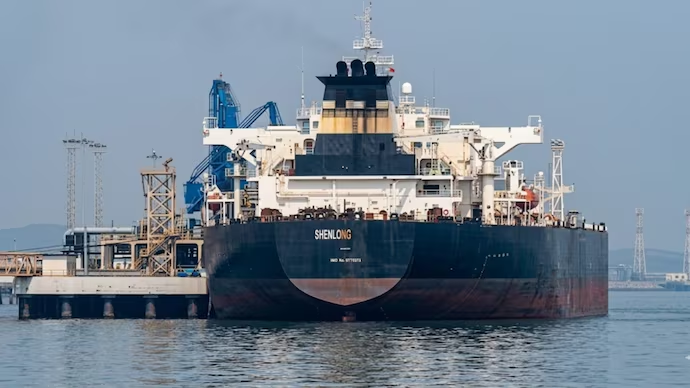
A crude oil tanker captained by an Indian mariner has safely reached Mumbai Port after navigating the conflict-hit Strait of Hormuz, one of the world’s most sensitive maritime corridors, amid rising tensions in the Persian Gulf.
The Liberia-flagged tanker Shenlong Suezmax, carrying crude oil loaded from Ras Tanura Port in Saudi Arabia, docked in Mumbai on Wednesday with 135,335 metric tonnes of crude oil. The cargo has begun discharging and will be transported to nearby refineries in the city.
Vessel Entered ‘Dark Mode’ in High-Risk Zone
According to ship-tracking platforms, the tanker’s last signal from the Strait of Hormuz was recorded on March 9, after which the vessel briefly switched off its Automatic Identification System (AIS) while passing through the high-risk zone.
This temporary shutdown placed the tanker in what maritime experts refer to as “dark mode,” a situation where a ship becomes effectively untraceable by global tracking systems. The vessel reappeared on monitoring platforms the following day before safely reaching Mumbai.
The AIS system is widely used in international shipping to automatically transmit data about a vessel’s identity, location, speed and route to nearby ships and coastal authorities. The system enhances maritime safety, prevents collisions, and helps authorities monitor global shipping movements.
Several Tankers Go Offline Amid Gulf Tensions
The tanker’s temporary disappearance from tracking systems comes at a time when multiple vessels in the region have gone offline. Reports indicate that two Very Large Crude Carriers (VLCCs), three Suezmax tankers, and a Panamax tanker have remained offline from AIS tracking for at least 48 hours.
These vessels are reportedly bound for major energy-consuming countries including China, India and Japan.
Strait of Hormuz Under Severe Threat
The developments come amid escalating tensions involving Iran, Israel and the United States. Since the start of the US–Israel military campaign against Iran, Tehran has effectively restricted movement through the Strait of Hormuz.
The strategic waterway is one of the most critical energy routes in the world, handling more than 20 million barrels of crude oil per day—roughly one-fifth of global oil consumption and nearly a quarter of all seaborne oil trade.
Over the past two weeks, at least 16 vessels have reportedly been attacked in the region, with Iran warning that more ships operating in the area could face strikes.
Indian Ships and Seafarers in the Region
The Government of India has said that 28 Indian-flagged vessels are currently operating in the Persian Gulf region. Among them, 24 vessels carrying 677 Indian seafarers are located west of the Strait of Hormuz, while four ships with 101 Indian crew members are positioned east of the strait.
In a related development on Wednesday, a Thai vessel heading toward Kandla Port in Gujarat was reportedly attacked while passing through the Strait of Hormuz, prompting strong criticism from New Delhi.
With tensions continuing in the Gulf region, maritime authorities and shipping companies are closely monitoring vessel movements to ensure the safety of ships, cargo, and crew navigating one of the world’s busiest and most volatile sea routes.
SEO Keywords: Strait of Hormuz tanker news, Indian captain oil tanker Mumbai, Shenlong Suezmax tanker arrival Mumbai, Gulf conflict shipping crisis, AIS dark mode tanker Strait of Hormuz, global oil supply route Hormuz, Indian vessels Persian Gulf update