
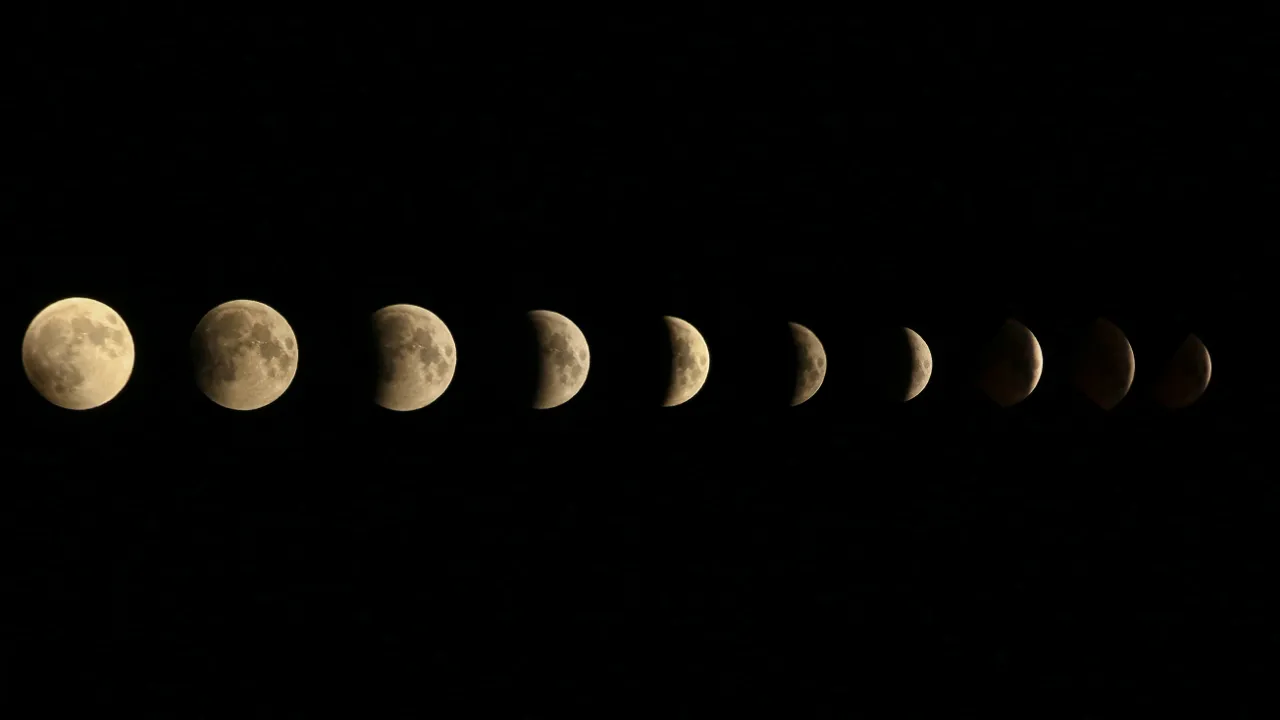
Skywatchers are set for a spectacular celestial treat as a deep total lunar eclipse will occur on Tuesday, March 3, 2026. The event, with an eclipse magnitude of 1.155, will see the Moon pass completely into Earth’s dark central shadow, creating the dramatic reddish glow popularly known as a “Blood Moon.”
What Is a Total Lunar Eclipse?
A total lunar eclipse happens when the Earth comes directly between the Sun and the Moon, causing the Moon to move entirely into Earth’s umbra (the darkest part of its shadow). During totality, the Moon often appears coppery red due to sunlight filtering through Earth’s atmosphere — a phenomenon widely referred to as a Blood Moon.
In contrast, a partial lunar eclipse occurs when only a portion of the Moon enters the Earth’s shadow.
Why This Eclipse Is Special
With a magnitude of 1.155, the March 3 event qualifies as a deep total lunar eclipse. This means the Moon will travel significantly into Earth’s umbral shadow, often resulting in a darker, richer red coloration compared to shallower eclipses. Such deep eclipses are relatively less frequent and are especially appealing for photographers and astronomy enthusiasts.
Where Will It Be Visible?
The eclipse will be visible across large parts of the world, including:
-
India
-
Eastern Asia
-
Australia
-
The Americas
However, visibility conditions will vary depending on local moonrise and weather conditions.
Timings in India (IST)
For viewers in India, the key timings are:
-
Eclipse Begins: 3:20 PM
-
Totality Starts: 4:34 PM
-
Totality Ends: 5:33 PM
-
Eclipse Ends: 6:48 PM
In most parts of India, the Moon will rise while the eclipse is already underway. This means observers will primarily witness the concluding stages of the event at moonrise.
However, in parts of North-East India and the Andaman and Nicobar Islands, skywatchers will be able to catch the tail end of the totality phase, offering a more complete viewing experience.
Do You Need Special Equipment?
No. Unlike a solar eclipse, a lunar eclipse is completely safe to view with the naked eye. While binoculars or a telescope can enhance the experience by revealing surface details and color variations, they are not required.
Viewing Tips
-
Check your local moonrise time.
-
Ensure a clear view of the eastern horizon.
-
Monitor local weather forecasts for cloud cover.
-
Photographers should use tripods and long exposures for the best results.
With the next major lunar eclipse visible in India scheduled later in the decade, the March 3, 2026 event stands out as a must-watch astronomical phenomenon for enthusiasts and casual observers alike.