
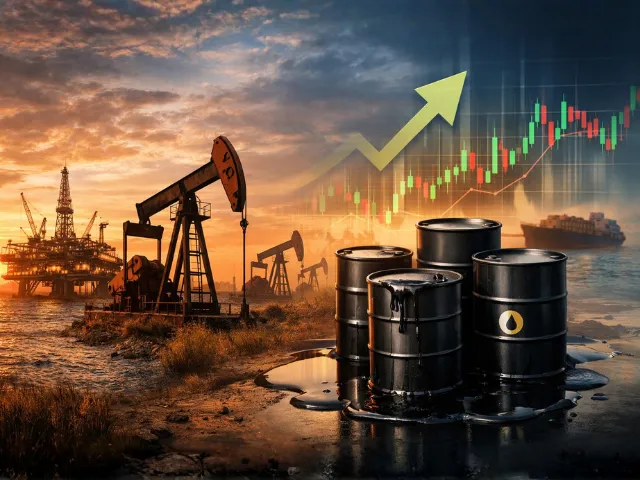
With tensions rising in West Asia following military strikes involving the United States and Israel against Iran, India has begun assessing its energy preparedness amid fears of a prolonged disruption in global oil supplies.
Strait of Hormuz Shut, Shipping Disrupted
Iranian state media reported that Tehran has shut the strategically crucial Strait of Hormuz — a narrow waterway that handles nearly 20% of global oil and gas shipments. The move followed airstrikes in which Iran’s Supreme Leader Ayatollah Ali Khamenei was reportedly killed.
Major global shipping lines have suspended transit through the strait, and an oil tanker sailing near Oman reportedly faced missile attacks. The disruption has triggered volatility across energy markets worldwide.
Oil Prices Jump 8%
Crude benchmarks surged as trading opened Sunday.
-
West Texas Intermediate (WTI) rose to around $72 per barrel, up 8% from Friday.
-
Brent crude, the international benchmark, climbed to approximately $79 per barrel, also up about 8%.
Energy analysts warn that prolonged conflict in the Gulf could sharply increase global crude and gasoline prices.
India’s Strategic Petroleum Cushion
Despite the developments, Indian officials said there is unlikely to be any immediate disruption in domestic supplies.
Earlier this year, Petroleum Minister Hardeep Singh Puri informed the Rajya Sabha that India’s combined crude reserves can last up to 74 days in case of global turbulence.
India’s reserves include:
-
Strategic Petroleum Reserve (SPR) facilities with about 9.5 days of supply
-
Stocks held by oil marketing companies and refineries covering around 67 days
Storage caverns are operational in Andhra Pradesh and Karnataka, with expansion plans in Odisha underway. The minister noted that while 90 days is the ideal benchmark, the current 74-day buffer provides reasonable security.
OPEC+ Steps In, But Concerns Persist
In response to the crisis, the Organization of the Petroleum Exporting Countries (OPEC+) announced a production increase of 206,000 barrels per day starting April. Participating countries include Saudi Arabia, Russia, Iraq, United Arab Emirates, Kuwait, Kazakhstan, Algeria and Oman.
However, analysts argue that increased production may not immediately offset disruptions if tanker movement through the Strait of Hormuz remains restricted.
Economic Impact on India
Iran exports around 1.6 million barrels of oil daily, largely to China. If those supplies are curtailed, competition for alternative crude sources could intensify.
Oil economist Kirit Parekh has suggested India may need to increase crude imports from Russia to mitigate price pressures. According to estimates:
-
A $1 per barrel rise in global crude prices could increase India’s annual import bill by $1.4 billion.
-
Gas prices may also rise, as India imports nearly 50% of its natural gas requirements.
What Lies Ahead
With nearly one-fifth of global oil flows passing through the Strait of Hormuz, markets remain on edge. While India’s reserve buffer offers short-term relief, sustained conflict could pressure fiscal balances, fuel prices, and inflation.
For now, policymakers are closely monitoring geopolitical developments, shipping activity, and crude price trends to safeguard India’s energy security.