
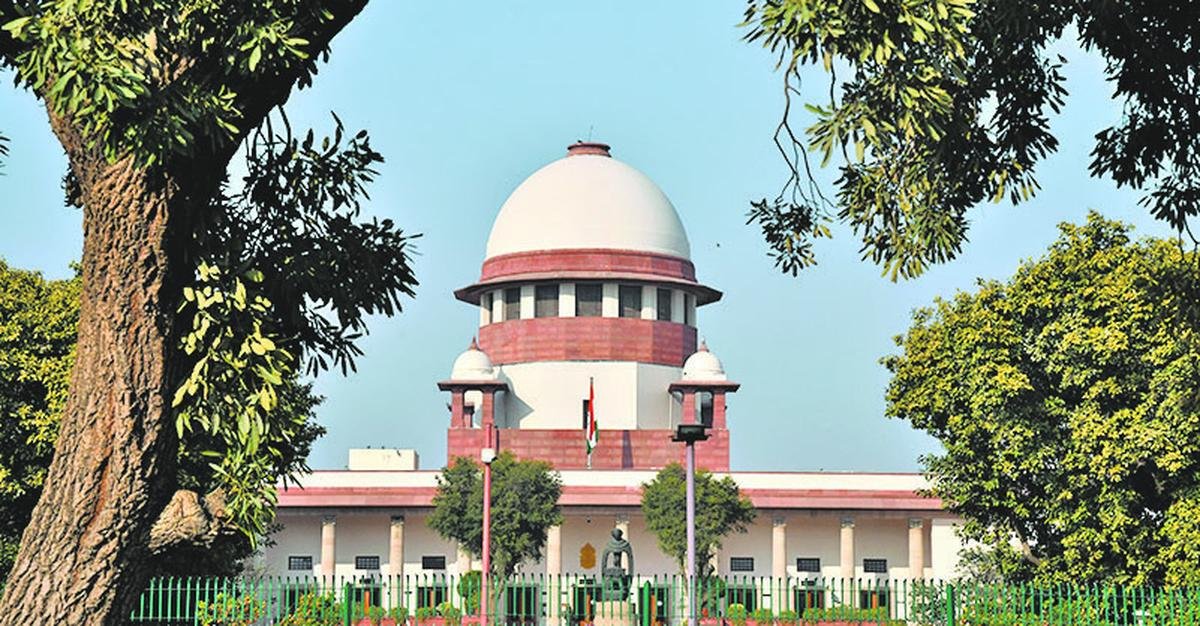
The Supreme Court of India on Friday directed the immediate seizure of all physical copies and the takedown of digital versions of a controversial Class 8 social science textbook published by the National Council of Educational Research and Training (NCERT). The book reportedly contained a section referring to “corruption in the judiciary.”
A bench led by Chief Justice of India (CJI) Surya Kant also issued show-cause notices to the NCERT Director and the Secretary, Department of School Education, asking them to explain why criminal contempt proceedings should not be initiated.
Court Terms Content a ‘Calculated Move’
The directions came a day after the bench described the inclusion of the section as a “calculated move” and a “deep-rooted conspiracy” to malign the judiciary. The bench, also comprising Justices Joymalya Bagchi and Vipul M Pancholi, observed that the response from NCERT lacked genuine remorse.
“We have seen the NCERT notice, and there is not a simple word of apology in it. The way this director has drafted this notice, there seems no remorse but justification,” the court remarked.
Although Solicitor General Tushar Mehta tendered an apology in court and NCERT earlier expressed regret over the “inappropriate material,” the bench said the explanation appeared to justify the contents rather than acknowledge the gravity of the issue.
When the government informed the court that two individuals involved in drafting the chapter would no longer be associated with the ministry, the bench termed the action “very light,” stating that the alleged damage to institutional credibility could not be addressed through minimal corrective steps.
Concern Over Impact on Students and Public Perception
The court emphasised that the matter extended beyond classroom discussions. It observed that teachers and parents could also be influenced by the narrative, especially if excerpts were widely circulated online.
“The teachers will first know that ‘the entire judiciary is corrupt’… then parents will learn it. It is a deep-rooted conspiracy to malign the judiciary,” the bench stated, adding that the State must take responsibility for issuing takedown orders.
In its written order, the court said it was “shocked” by media reports regarding the February 2026 publication titled “Exploring Society: India and Beyond.” While the chapter purportedly discussed the role of the judiciary in society, it allegedly focused prominently on complaints against judges without adequately highlighting the judiciary’s role in upholding constitutional morality, the basic structure doctrine, legal aid, and access to justice.
On a prima facie assessment, the court said the content, read alongside the director’s administrative response, suggested an attempt to undermine institutional authority and demean the dignity of the judiciary.
Contempt Proceedings and Compliance Directions
Clarifying that the proceedings were not intended to stifle legitimate criticism, the bench said exposing students “in their formative years” to what it termed a “biased narrative” could create long-lasting misconceptions.
Given the “serious consequences” and potential impact on the independence and autonomy of the judiciary, the court observed that the conduct may fall within the ambit of criminal contempt, as it appeared to scandalise the institution and interfere with the administration of justice.
The apex court imposed a complete ban on the production and distribution of the book and warned that any attempt to circulate it would amount to wilful disobedience of its order.
The NCERT Director has been directed to ensure the seizure of all distributed copies and submit a compliance report. Principal Secretaries of Education in all states have also been instructed to ensure that no teaching is conducted using the book and to file compliance reports within two weeks.
Additionally, the Director has been asked to provide the names and credentials of members of the National Syllabi Board who drafted the chapter, along with the original minutes of meetings where the content was discussed.