
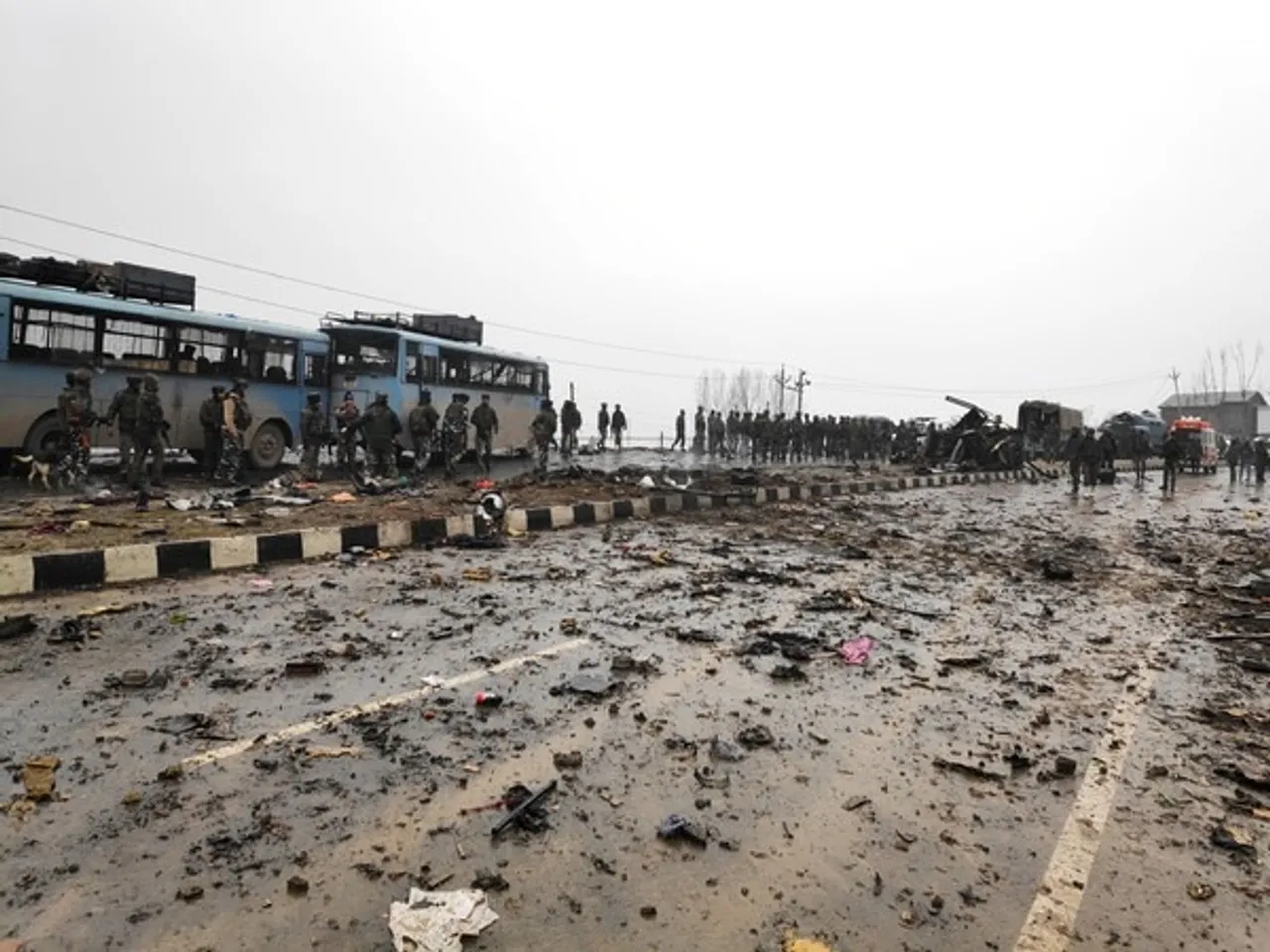
February 14, 2019, is remembered as one of the darkest days in India’s fight against terrorism, when a deadly suicide bombing in Jammu and Kashmir’s Pulwama district claimed the lives of 40 security personnel and triggered a major shift in India’s counter-terror response strategy.
The attack targeted a convoy of the Central Reserve Police Force on the Jammu–Srinagar National Highway and was later claimed by Pakistan-based terror group Jaish-e-Mohammed. The incident not only shocked the nation but also led to significant military and diplomatic developments between India and Pakistan in the weeks that followed.
How The Pulwama Attack Unfolded
According to official investigations, a local suicide bomber drove an explosives-laden vehicle into a CRPF convoy near Lethapora in Pulwama on the afternoon of February 14. The convoy included dozens of vehicles carrying more than 2,500 personnel.
The attacker used a modified Maruti EECO packed with nearly 200 kg of explosives, including RDX and gelatin sticks. The massive explosion caused extensive destruction, making it one of the deadliest terror strikes on Indian security forces in recent decades. Probe agencies later pointed to detailed reconnaissance, logistical support, and cross-border links behind the planning and execution of the blast.
India’s Military Response: Balakot Airstrike
Twelve days after the attack, India carried out a cross-border air operation targeting terror infrastructure in Pakistan. The strike, widely known as the Balakot airstrike, marked the first time since the 1971 war that Indian fighter jets struck deep inside Pakistani territory.
In the early hours of February 26, 2019, Indian Air Force jets conducted precision strikes on what officials described as a major JeM training facility in Balakot. According to Indian authorities, the target was a key camp used for training and preparing militants for attacks in India.
Pakistan disputed the damage and casualty claims, stating that the munitions fell in a forested area and did not hit any major installation. The conflicting accounts fueled global debate and sharply escalated tensions between the two neighbours.
Aerial Clash And Capture Of Indian Pilot
The day after the airstrike, aerial engagements took place across the Line of Control. During the confrontation, an Indian MiG-21 Bison aircraft was shot down, and its pilot, Abhinandan Varthaman, was captured by Pakistani forces after ejecting across the border.
Images and videos of the captured pilot circulated widely, intensifying public concern and diplomatic pressure. He was released by Pakistan within days as a “gesture of peace,” a move that helped reduce immediate military tensions.
Global Reaction And Diplomatic Fallout
The Pulwama terror attack drew strong condemnation from many countries, with several governments expressing solidarity with India and support for counter-terror efforts. The episode brought renewed global focus on cross-border terrorism and regional security in South Asia.
Major powers, including the United States and European nations, called for restraint while also backing India’s right to protect itself against terror threats. The crisis triggered intense diplomatic engagement aimed at preventing further escalation between the two nuclear-armed countries.
A Lasting National Memory
Years later, the Pulwama attack remains a solemn reminder of the risks faced by India’s security forces and the human cost of terrorism. Memorial events and tributes continue to honour the CRPF personnel who lost their lives, while the subsequent airstrike and standoff are seen as a defining moment in India’s security doctrine and response posture.