
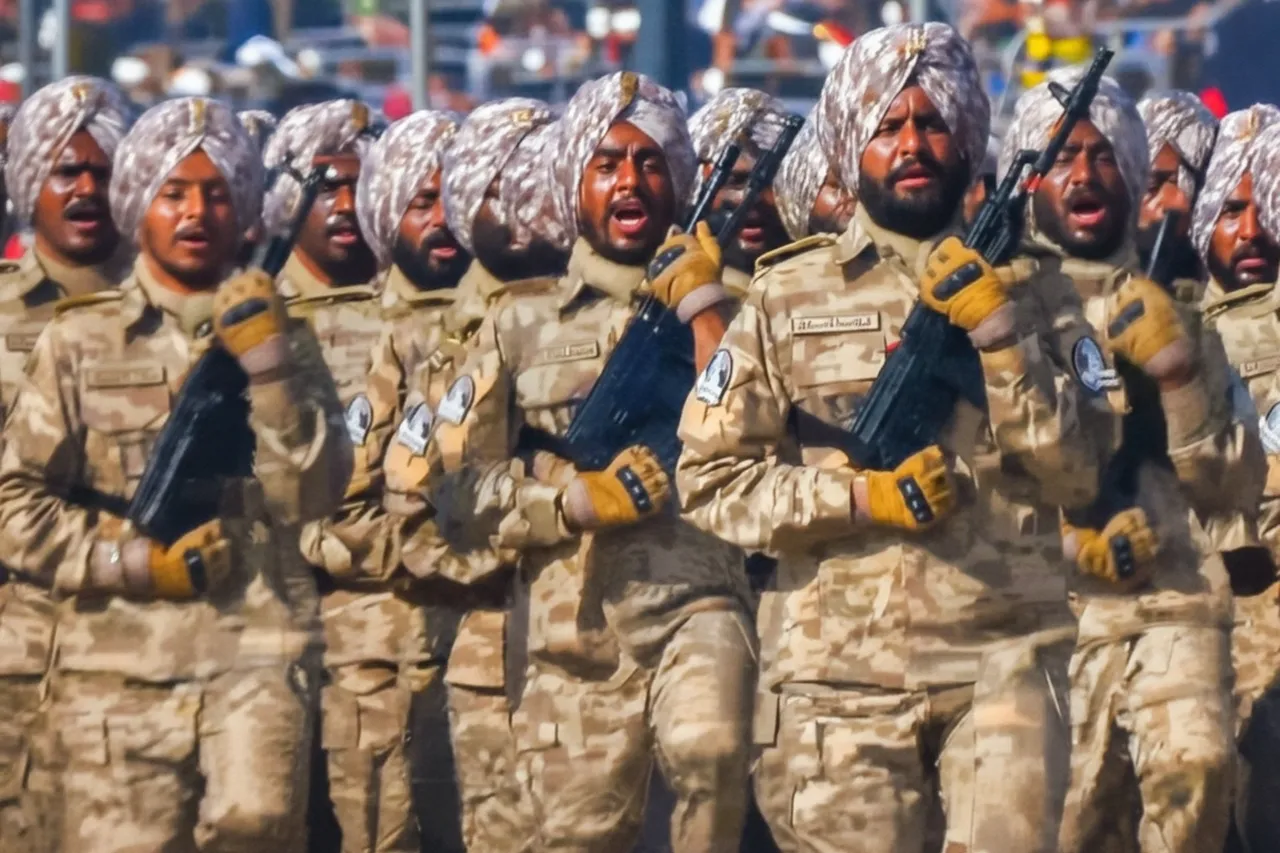
The Indian Army has taken a significant step towards reshaping its battlefield doctrine with the public unveiling of its new ‘Bhairav’ light commando units, a force designed to bridge the gap between conventional infantry and elite special forces. The sixth Bhairav unit was showcased to the Eastern Command in Kolkata, while the fourth Bhairav Battalion of the Sikh Light Infantry Regiment made its debut in the national capital, signalling the Army’s intent to prepare for fast-evolving and technology-driven conflicts.
Under the winter sun on Kolkata’s iconic Red Road, the Bhairav soldiers appeared before the public for the first time — not in ceremonial finery, but in full operational battle gear, underscoring their combat-ready role. The troops marched in a “Phased Battle Array Formation”, a tactical display that mirrored real battlefield movement, beginning with reconnaissance elements and progressing to heavier combat support units.
Bridging a Critical Tactical Gap
For decades, the Indian Army has relied on large infantry battalions to hold territory and Para Special Forces for deep, covert operations. However, changing threat perceptions along the borders, grey-zone warfare, and rapid escalation scenarios have exposed the need for a highly mobile, intermediate combat force.
The Bhairav units are designed precisely to fill this gap. Each unit comprises around 250 highly trained soldiers, making them significantly more agile and faster to deploy than traditional infantry formations. Built for rapid response, these units are capable of being combat-ready within hours, earning them the description of forces that can “fight tonight” rather than waiting days for mobilisation.
Designed for Modern Battlefields
The Bhairav formations are structured to operate independently and effectively across diverse terrains — from mountains and jungles to urban and semi-urban environments. Each unit integrates drone operators, Signals specialists, air defence elements and artillery support, providing commanders with surveillance, communication and strike capabilities within a single, compact formation.
This integrated design allows Bhairav units to carry out missions such as forward reconnaissance, limited offensive actions, counter-infiltration operations and rapid reinforcement in crisis situations.
‘Sons of the Soil’ and the Bhairav Ethos
Inspired by Bhairav, the fierce manifestation of Lord Shiva symbolising controlled aggression and fearlessness, the units embody the Army’s traditional ‘Sant Sipahi’ ethos — warrior monks who combine discipline with decisive action.
A key feature of the Bhairav concept is recruitment under the “Sons of the Soil” principle. Soldiers are inducted from regions close to their operational areas, enhancing their familiarity with local terrain, climate and cultural conditions. This approach strengthens operational effectiveness while fostering deeper integration with the regions they are tasked to protect.
A Strategic Signal
The public debut of the Bhairav units sends a clear strategic message about the Indian Army’s evolving doctrine. As warfare increasingly demands speed, precision and adaptability, the Army is moving towards leaner, tech-enabled formations capable of responding swiftly to emerging threats.
Defence analysts view the induction of Bhairav units as a critical step in preparing for future conflicts where rapid deployment, situational awareness and multi-domain integration will be decisive. With more units expected to be raised, the Bhairav force is likely to become a cornerstone of India’s frontline combat strategy in the years ahead.