
Koraput: The very mention of Koraput evokes images of breathtaking natural beauty—lush green forests, rolling hills, vibrant tribal traditions and unique handcrafted art forms. Among these cultural treasures, one traditional textile has emerged as a defining symbol of the district’s heritage and craftsmanship—the handwoven Kotpad saree. Once known only within Odisha, this exquisite handloom creation has now gained national and international recognition, evolving into a distinctive fashion statement across India and abroad.
What Makes Kotpad Sarees Unique
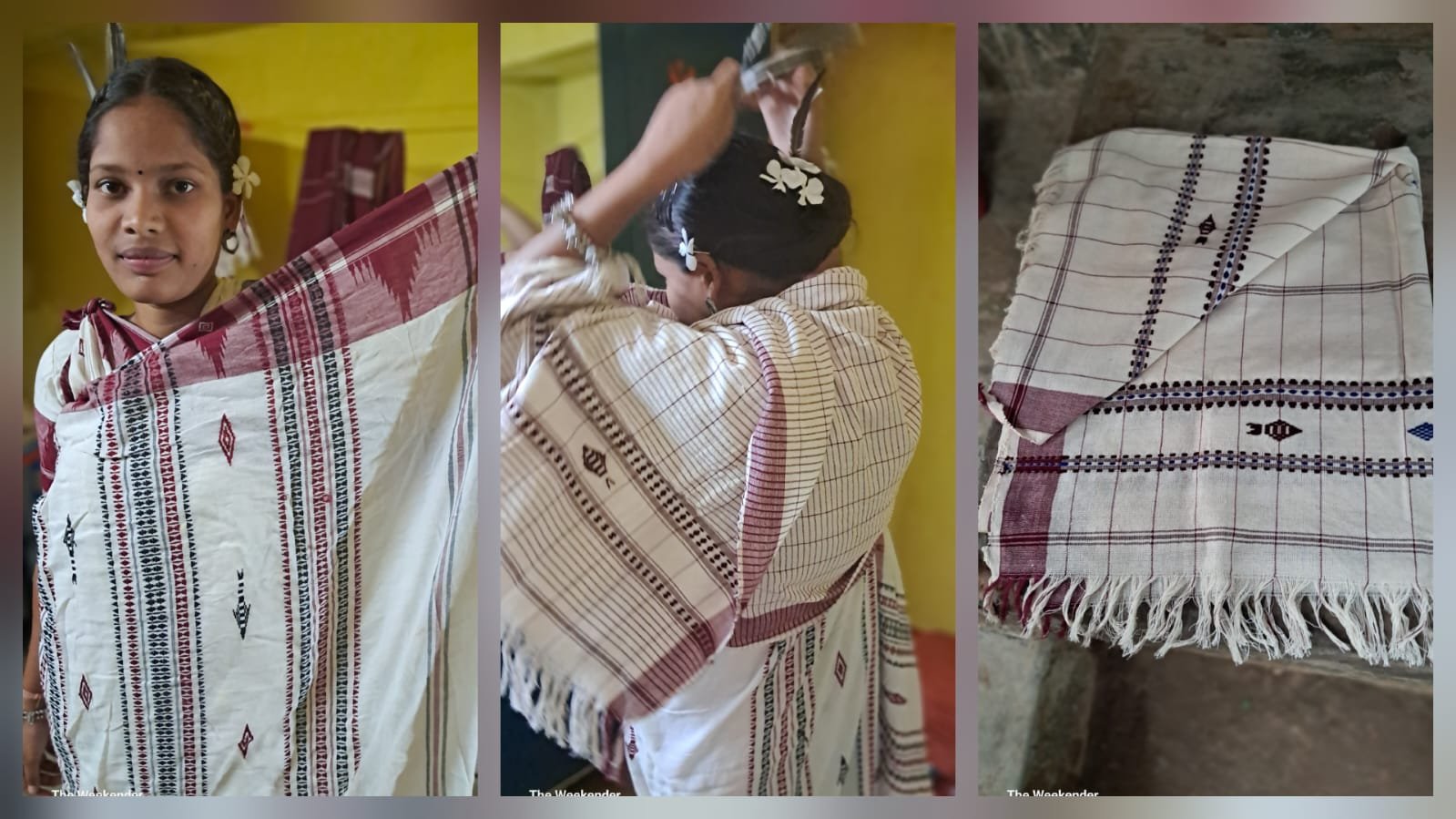
Kotpad sarees are celebrated for their soft texture, comfortable drape and earthy elegance. The natural colour palette—ranging from deep maroons to rich browns and subtle blacks—sets them apart from other handloom sarees. The colours are not artificial but derived entirely from natural dyes, giving each saree an organic charm and timeless appeal.
The finesse of the weaving is so captivating that tourists, including foreign visitors, often stop near weaving clusters in Kotpad to watch artisans skillfully transform yarn into fabric. The entire process reflects patience, precision and generations of inherited knowledge.
Traditional Craft Rooted in Tribal Heritage
The primary hub of Kotpad saree production is Dangariguda village, located about 15 kilometres from Kotpad town. The craft is preserved by traditional weaver families belonging to the Mirgan tribal community, who have safeguarded this ancestral skill for centuries. Every Kotpad saree is entirely handwoven, without the use of machines, following age-old techniques passed down through generations.
Crafting a single saree requires the dedicated effort of two skilled artisans over six to seven days. From dyeing the yarn to completing the weave, the entire process can take nearly one month. According to weavers, with proper care, a Kotpad saree can last over 30 years, making it both durable and sustainable.
Natural Dyes and Indigenous Materials
The eco-friendly nature of Kotpad sarees lies in their unique dyeing process. Cotton yarn is sourced from Bargarh district, while tussar silk yarn comes from the Bastar region of Chhattisgarh. Natural dyes are prepared using traditional ingredients such as the roots of the aal tree, cow dung, harida (chebulic myrobalan), bahada and ash. These organic materials not only give the saree its distinctive hues but also make it skin-friendly and environmentally sustainable.
Evolving Identity and Global Reach
Earlier known by traditional names like Lal Bori, Sundarmani Dhoti and Kobori Pat, Kotpad sarees are now marketed under contemporary names such as Mirgan Pat, Sundarmani Pat and Mirgan Tussar Silk Saree, enhancing their appeal among modern consumers.
Today, Kotpad sarees are exported across India and to international markets including the United States, Japan, France, Italy and Germany. Depending on the quality, yarn used and intricacy of design, prices range from ₹10,000 to ₹30,000–₹40,000, reflecting the craftsmanship and time invested in each piece.
Sustaining Livelihoods and Cultural Pride
At present, around 80 families of the Mirgan community are engaged in Kotpad weaving, with 15 to 20 highly skilled artisans specializing in premium-quality sarees. The Handloom and Weaving Department provides training, technical assistance and support to help artisans sustain and expand their craft.
By preserving their ancestral livelihood while adapting to contemporary markets, Kotpad weavers have successfully showcased Odisha’s handloom heritage on the global stage. The Kotpad saree today stands not just as a garment, but as a symbol of tribal identity, sustainable fashion and cultural pride, reflecting the soul of Koraput’s rich traditions.