

Koraput: Koraput district, widely known for its favourable climate and rich agricultural potential, is steadily emerging as a hub for innovative and high-value farming practices. In a significant development this year, farmers in the agriculture-dominated district have taken up black turmeric cultivation, opening new avenues for income generation and rural employment.
The introduction of black turmeric has provided farmers with a profitable alternative crop, while also strengthening Koraput’s position in the cultivation of medicinal and specialty plants. Agricultural experts say the district’s soil quality, rainfall pattern and moderate temperature make it highly suitable for cultivating this rare and valuable crop.
Rare Medicinal Plant With Exceptional Value
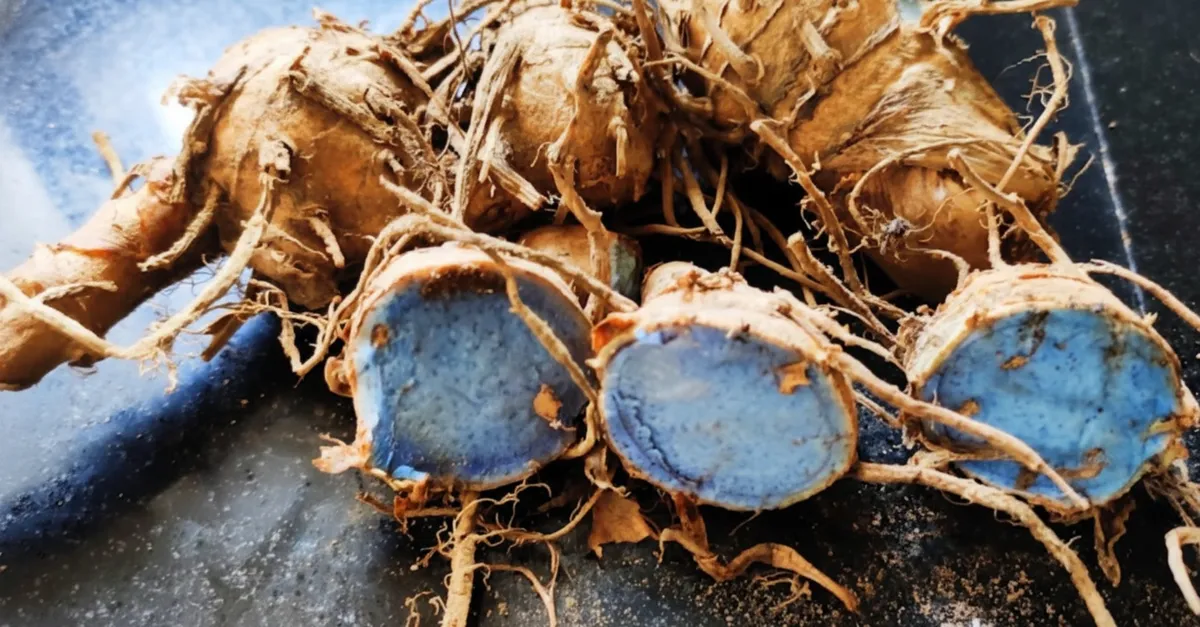
Black turmeric is considered one of the rarest medicinal plants and is renowned for its powerful therapeutic properties. Unlike common turmeric, black turmeric has a distinctive appearance—when cut open, the rhizome displays a striking blue and violet colour, indicating its rich medicinal compounds.
The crop is widely used in traditional medicine and is believed to be effective in treating serious ailments, including cancer. It is also used as a natural balm and in various Ayurvedic and herbal formulations. Due to its medicinal significance, black turmeric has long held an important place in traditional healing systems.
Growing Demand Driven by Ayurveda and Natural Healing
With a rising inclination towards Ayurveda and natural healthcare across India, demand for black turmeric has increased significantly in recent years. Pharmaceutical companies and herbal product manufacturers are actively sourcing the crop, while countries like China import black turmeric for medicinal use.
Earlier, black turmeric cultivation was largely confined to Odisha, Assam and West Bengal, where it is also used in religious rituals and auspicious ceremonies. Historically, the plant was first discovered in the mountainous regions near the Kamakhya Temple, and it continues to hold spiritual importance in eastern India.
Over the past seven years, cultivation has expanded to Rajasthan, including districts such as Jaipur, Dausa and Sikar. Successful trials in these regions have demonstrated the crop’s ability to adapt to diverse agro-climatic conditions. Encouraged by these results, farmers in Koraput have now begun cultivating black turmeric with promising outcomes.
High Returns With Low Processing Requirements
Agricultural experts highlight that black turmeric cultivation offers exceptional financial returns, with farmers earning ₹7 to ₹8 lakh per acre annually. About 400 kilograms of rhizomes are required to cultivate one acre of land. While first-time growers need to invest in planting material, the same rhizomes can be reused for future cultivation, reducing long-term costs.
Another major advantage is that black turmeric does not require extensive processing. It can be sold fresh in the market or semi-processed in sliced form, without the need for drying. Farmers can also grow other medicinal plants alongside black turmeric without affecting its yield, allowing for diversified farming and better land use.
Employment Generation and Sustainable Farming
The expansion of black turmeric cultivation has also contributed to local employment generation, particularly during planting, harvesting and post-harvest handling. With rising domestic and export demand, experts believe the crop can play a crucial role in strengthening sustainable and medicinal agriculture in Koraput.
Given its high market value, low cultivation cost and growing demand, black turmeric is emerging as a lucrative and sustainable farming option for farmers in the district. Agricultural officials feel that with proper guidance, training and market linkages, Koraput has the potential to become a key centre for black turmeric cultivation in eastern India.