
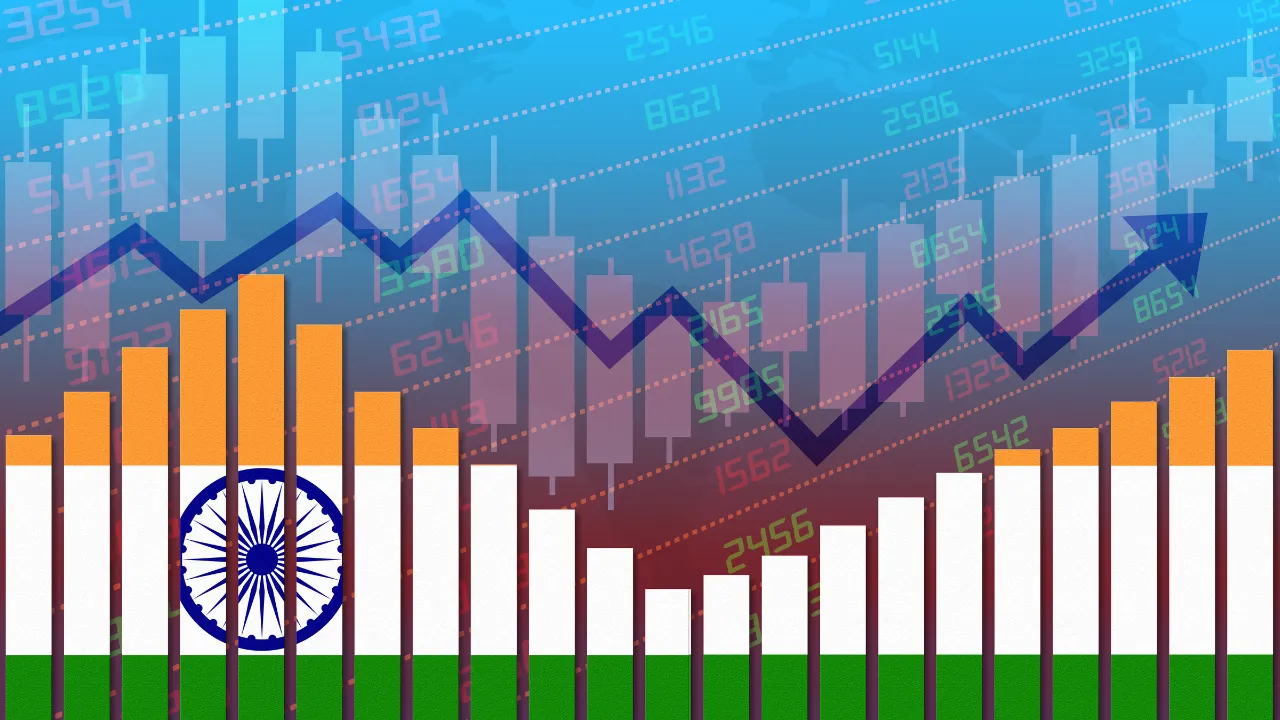
India has officially overtaken Japan to emerge as the world’s fourth-largest economy, with a Gross Domestic Product (GDP) of USD 4.18 trillion, the government announced. The milestone underscores India’s strong economic momentum at a time when many global economies continue to grapple with geopolitical tensions, slowing trade, and inflationary pressures. With sustained growth, India is now firmly positioned to surpass Germany and become the world’s third-largest economy by 2030.
According to a government release detailing major economic reforms and projections for 2025 and beyond, India’s economy is expected to expand significantly over the remainder of the decade, reaching an estimated USD 7.3 trillion by 2030. At present, the United States remains the world’s largest economy, followed by China in second place, while Germany occupies the third position.
Strong Growth Despite Global Headwinds
India continues to stand out as the fastest-growing major economy globally. Official data show that real GDP growth accelerated to 8.2 per cent in the second quarter of the 2025–26 financial year, up from 7.8 per cent in the first quarter and 7.4 per cent in the final quarter of the previous fiscal year. This marks a six-quarter high, reflecting the economy’s resilience despite persistent global challenges such as supply chain disruptions, volatile commodity prices, and sluggish demand in key international markets.
The government attributed the robust growth primarily to strong domestic fundamentals. Private consumption has remained resilient, supported by rising incomes, steady employment gains, and improved consumer confidence, particularly in urban areas. Increased public capital expenditure and sustained momentum in infrastructure development have also played a crucial role in driving economic activity.
Global Agencies Remain Optimistic
India’s growth trajectory has been reinforced by positive assessments from major international institutions. The World Bank has projected India’s economy to grow at 6.5 per cent in 2026, while the International Monetary Fund (IMF) has revised its growth forecast upward to 6.6 per cent for 2025. Moody’s Investors Service has also indicated that India is likely to remain the fastest-growing economy among the G20 nations in the coming years.
The government release further highlighted several macroeconomic improvements, including easing inflationary pressures, declining unemployment levels, improved export performance, and strong credit growth. These trends have been supported by firm domestic demand, expanding manufacturing activity, and strengthening urban consumption, even as rural demand shows signs of gradual recovery.
Path to Becoming the Third-Largest Economy
Economists believe that India’s demographic advantage, expanding middle class, digital transformation, and continued policy reforms will be key drivers in its journey toward becoming the world’s third-largest economy. Initiatives aimed at boosting manufacturing, improving ease of doing business, expanding digital infrastructure, and attracting foreign investment are expected to further accelerate growth.
If current trends continue, India is likely to surpass Germany by the end of this decade, marking a historic shift in the global economic order and reinforcing its position as a major driver of global growth in the years ahead.