
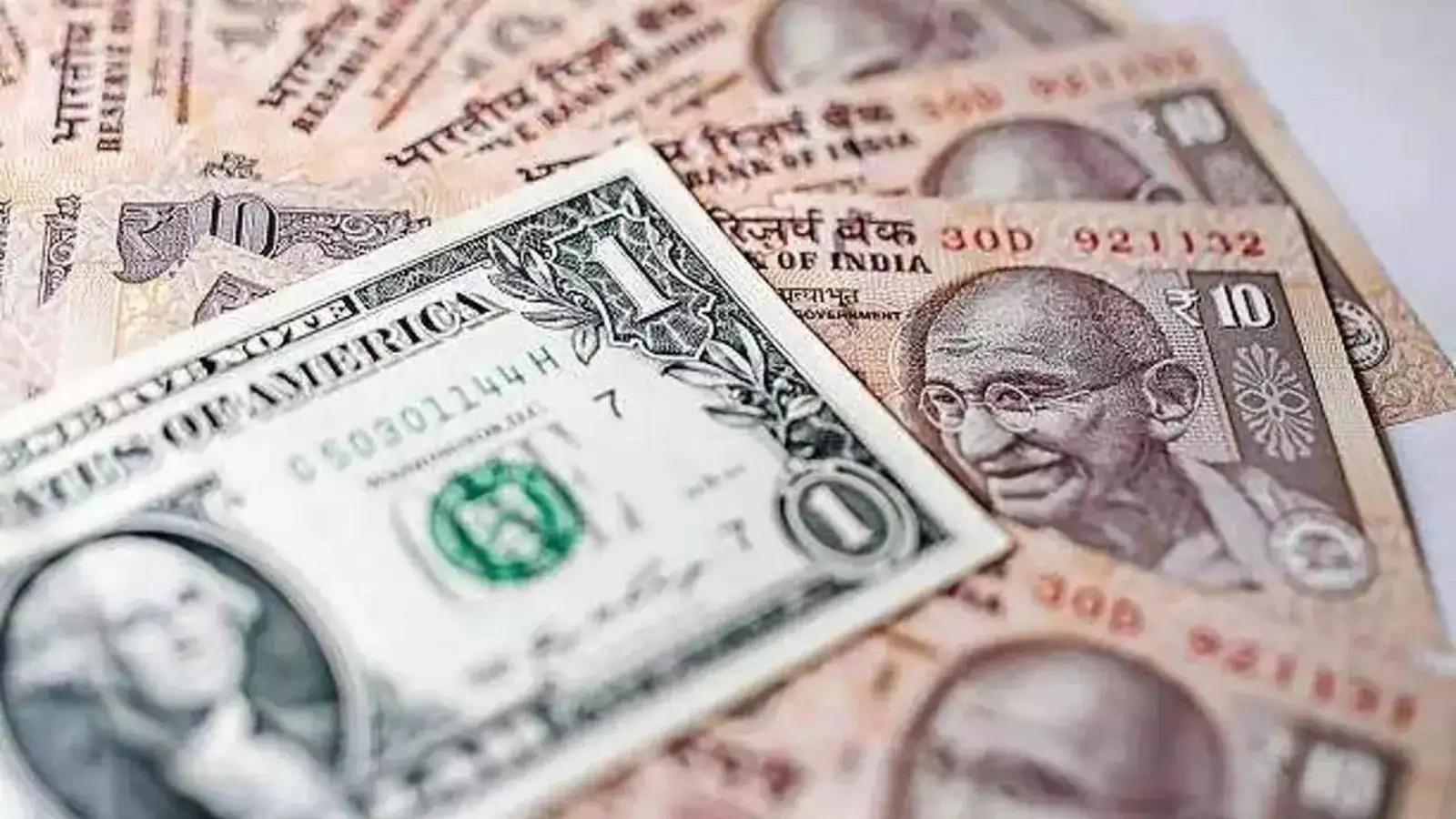
The Indian rupee weakened sharply on Tuesday, plunging 36 paise to breach the psychologically crucial 91-mark against the US dollar for the first time in intraday trade, as sustained foreign fund outflows and uncertainty surrounding the India–US trade agreement weighed heavily on the domestic currency.
According to PTI, the rupee opened the session 9 paise lower at 90.87, extending losses from the previous trading day when it had already slipped by 25 paise. Selling pressure intensified as the session progressed, pushing the currency below the 91 level.
So far in 2025, the rupee has depreciated by nearly 6%, reflecting persistent pressure from global and domestic factors. On January 1, 2025, the rupee was trading at 85.72 per dollar, highlighting the scale of the decline within a relatively short period.
Imports, Overseas Travel and Education Costs Surge
A weaker rupee has far-reaching implications for the Indian economy and consumers. As the currency depreciates, imports become significantly more expensive, leading to higher costs for crude oil, gold, electronic goods and other essential commodities. This, in turn, can add to inflationary pressures.
The falling rupee has also made foreign travel and overseas education costlier for Indian households. For example, when the exchange rate stood at ₹50 per dollar, students studying in the US needed ₹50 to access $1. At the current level of ₹91 per dollar, expenses related to tuition fees, accommodation, food and insurance have risen sharply, increasing the financial burden on families.
Key Factors Driving the Rupee’s Decline
1. Uncertainty Over India–US Trade Deal
Market sentiment has been dampened by the lack of clarity on the India–US trade agreement. Repeated delays and ambiguous timelines have raised concerns over export prospects and capital inflows.
Additionally, US President Donald Trump’s decision to impose a 50% tariff on Indian imports has heightened worries. Analysts estimate that such tariffs could reduce India’s GDP growth by 60–80 basis points and widen the fiscal deficit, potentially weakening investor confidence.
2. Heavy FII Selling
Foreign Institutional Investors (FIIs) have been major sellers in Indian markets. Since July 2025, FIIs have reportedly sold Indian assets worth over ₹1.55 lakh crore. The conversion of equity sale proceeds into dollars has significantly increased demand for the US currency, putting downward pressure on the rupee.
3. Rising Dollar Demand for Imports and Hedging
Higher global prices of oil, gold and metals have increased India’s import bill. Import-heavy companies and oil marketing firms are actively buying dollars for payments and hedging purposes. At the same time, importers are stockpiling foreign currency amid trade uncertainty, further strengthening the dollar against the rupee.
Limited RBI Intervention Raises Concerns
According to Jatin Trivedi, VP – Research Analyst at LKP Securities, the rupee’s breach of the 90-mark is largely due to prolonged uncertainty over the India–US trade deal. Elevated global commodity prices have added to pressure by increasing India’s foreign exchange outgo, while high US tariffs have affected export competitiveness.
Trivedi noted that Reserve Bank of India (RBI) intervention has been relatively limited so far, which has accelerated the pace of depreciation. With the RBI’s monetary policy meeting scheduled for Friday, market participants are closely watching for possible measures to stabilise the currency. Technically, the rupee is now considered oversold, raising expectations of corrective action.
How Currency Depreciation Works
Currency depreciation occurs when a country’s currency loses value against another currency, such as the US dollar. Foreign exchange reserves play a critical role in maintaining currency stability.
If India’s dollar reserves decline due to higher imports or capital outflows, the rupee weakens. Conversely, strong exports, foreign investments and capital inflows help boost reserves and support the currency. Stability is achieved when reserves are balanced against global trade dynamics and capital flows.
As global uncertainties persist and foreign investor sentiment remains cautious, the rupee is likely to remain volatile in the near term, with markets closely tracking policy signals, trade developments and RBI action.