
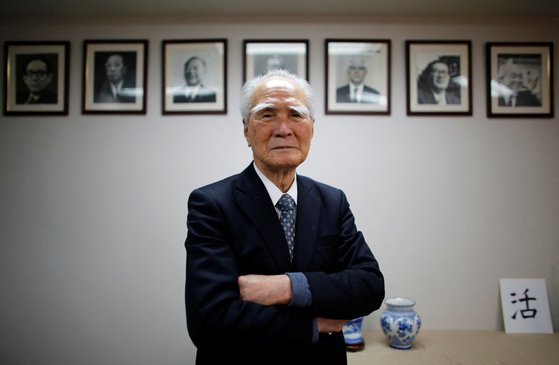
Tokyo, October 17, 2025: Tomiichi Murayama, Japan’s former Prime Minister remembered for his landmark 1995 apology for Japan’s wartime aggression, passed away on Friday at the age of 101, party officials confirmed.
Mizuho Fukushima, head of the Social Democratic Party (SDP) — considered the successor to Murayama’s now-defunct Socialist Party — announced on X (formerly Twitter) that “Tomiichi Murayama, the father of Japanese politics, passed away today at 11:28 a.m. at a hospital in Oita City.”
According to Hiroyuki Takano, secretary-general of the SDP in Oita, Murayama’s hometown, the former premier died of old age.
A Defining Legacy: The Murayama Statement
Murayama is best remembered for issuing the 1995 “Murayama Statement” on the 50th anniversary of Japan’s surrender in World War II. In it, he expressed “deep remorse” and offered a “heartfelt apology” for Japan’s wartime atrocities and colonial aggression across Asia.
“Japan… through its colonial rule and aggression, caused tremendous damage and suffering to the people of many countries, particularly to those of Asian nations,” Murayama said in the historic address.
He went on to urge that such mistakes never be repeated, adding that Japan must face these “irrefutable facts of history” with humility.
His words became a benchmark for Tokyo’s postwar apologies, shaping the language of contrition adopted by successive Japanese leaders during the 60th and 70th war anniversaries.
A Time of Crisis and Change
Murayama, who served as Prime Minister from 1994 to 1996, led a coalition government that included the traditionally dominant Liberal Democratic Party (LDP) — a rare political alliance in Japan’s postwar history.
His tenure was marked by significant national crises, including:
-
The 1995 Great Hanshin Earthquake, which devastated western Japan.
-
The Tokyo subway sarin gas attack by the Aum Shinrikyo cult, which killed 13 and injured over 5,800 people.
Despite criticism of the government’s handling of these disasters, Murayama was widely respected for his humility and moral leadership.
From Soldier to Statesman
Born in Oita Prefecture in 1924, Murayama was conscripted into the Imperial Japanese Army in 1944 while still a university student.
Reflecting on his military experience in a 2015 interview with NHK, he called the army a “dreadful thing”, recalling that dissent was completely forbidden. He described the final days of the war as desperate, noting that “food was already scarce, and very few weapons remained — we had weapons made of bamboo.”
Remembering a Humble Leader
Murayama, instantly recognizable for his distinctive bushy eyebrows, remained an active voice in Japan’s peace movement even after retirement. His 1995 statement continues to serve as a moral compass for Japan’s postwar diplomacy and reconciliation efforts in Asia.
He is survived by his family. Funeral details are yet to be announced.